Showing posts with label Fish. Show all posts
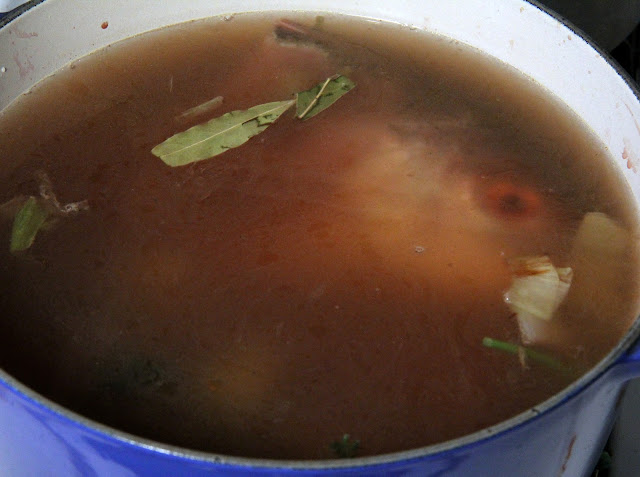
Fumet
I rarely discuss a particular individual in the context of any particular Joy and Feast recipe. I am not opposed to it, in fact I believe that if one person has made a historical impact on cooking, they deserve discussion. Few individuals have made as large of an impact on haute cuisine (French high cuisine) as Auguste Escoffier. Escoffier was a master chef and a writer, having penned nine books including the venerated Le Guide Culinare and Ma Cuisine. Escoffier wrote about the practical and excessive elements of French haute cuisine, and many of his contributions are still implemented in kitchens across the world.

The English version of Le Guide Culinaire(1903) is called The Escoffier Cookbook: A Guide to the Fine Art of Cookery.(1907) This is a book which has remained relevant for over one hundred years. In this book, Escoffier states that stocks are the foundation of great cooking, not only do they impart flavor, umami, and richness into food but they are also a wonderful way to utilize both meat and vegetable scraps.

Fish stock with red wine is found in The Escoffier Cookbook, essentially the French culinary bible, but fish stock is also a basic element in many Eastern cuisines and those countries with abundant costal fisheries. There are many variants on fish stock, but they have one commonality. Fish stock should only cook for around 20 minutes and no longer than one hour, and always at below boiling temperatures, whereas other meat stocks cook for significantly longer and usually at a soft boil.

Harold McGee explains that like mammals and birds, fish also have connective tissue such as collagen, which when broken down in liquid become the essence of a stock. Because fish exist in lower temperature environments their bodies are effected by temperature differently than other animals used in stocks. Collagen in warm water fish like Tilapia break down at 77F, cold- water fish like cod break down at 50F and mollusks like squid and octopus are around 180F. (602-603) With this knowledge applied practically we know that not even a simmer is required for many fish stocks.

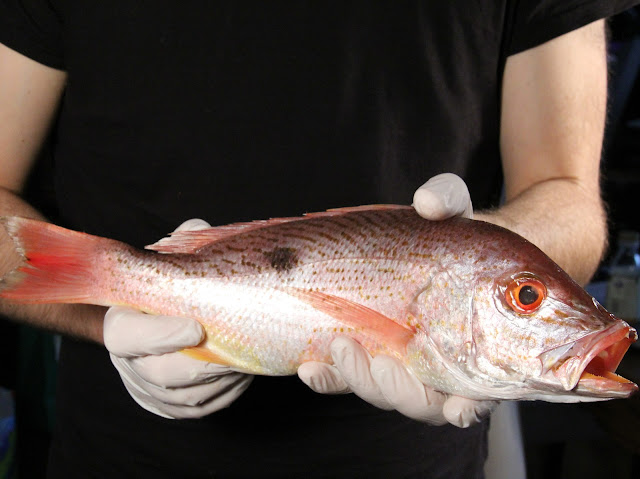
There is leeway when choosing what fish to use for a stock. I used a small whole Red Snapper for a few practical reasons. Red Snapper are pretty affordable, and when you buy a fish whole you can better gauge its freshness. The shimmer of the scales, and lack of fishy smell are telltale signs of a fresh fish. The largest benefit of buying a whole fish is that you are able to examine the eyes. As a fish decays the eyes become cloudy and sunken. A whole Snapper will leave you with two fillets for another usage and everything else except for the scales and gills can be used to make fumet.
Fumet


Fumet


Ingredients
  • 1 pound White fish bones, head, and tail. Snapper, trout, bass, ect...
  • 1 White onion
  • 1 Leek
  • 1 Carrot, peeled
  • 3 Garlic cloves
  • 5-8 Peppercorns
  • 2 Bay Leaves
  • 1/4 c Red wine
  • 1 sprig Parsley
  • 1 sprig Thyme
  • Butter to cook
Cooking Directions
  1. Rinse fish under water, gut, remove the gills, and remove scales. Rinse once again.
  2. Fillet fish, reserve fillets for another use.
  3. Heat up a 6 quart enamel coated dutch oven and add butter. (A small stock pot is also fine)
  4. Brown onion, leek, carrot and garlic in butter.
  5. Deglaze dutch oven with red wine. Scrape off all the brown leftovers in your pot.
  6. Add peppercorns, bay leaf, parsley and thyme. Either use a sachet or directly add to the pot.
  7. Fill the pot up with cold water.
  8. Over medium heat bring pot to a simmer. Add all the leftover fish bones to the stock and let simmer for 20 minutes.
  9. After 20 minutes has elapsed, strain and allow to come to room temperature, then you may store in the refrigerator for 3-5 days or in the freezer indefinitely.
Total Time: 35 min

Citations and Further Readings:
  • Escoffier, Auguste. The Escoffier cook book: a guide to the fine art of cookery. Clarkson Potter, 1941.
  • McGee, Harold. On food and cooking: the science and lore of the kitchen. Simon and Schuster, 2007.
Smoked Trout Rillette

Judo - the Japanese martial art and sport is translated as the gentle way. The philosophy behind the gentle way is in order to overcome an opponent one should not merely exerted force, but rather use an opponents force against them. For example, when an opponent pushes a judo practitioner they will pull their opponent to the ground taking advantage of gravity, not fighting against it. The lesson to be taken away from this philosophy is 'go with the flow' and be willing to adapt. Sometimes life throws a curve ball and plans go awry.

I had planned on doing a smoked freshwater eel rillette recipe for years. Freshwater eels are important in both Western and Eastern European cuisine as well as in Asia. Imagine how happy I was to find a whole smoked eel fillet at a local Eastern European specialty grocery store. I had a recipe floating around in my head, and the final step before purchasing this eel was to check The Monterey Bay's sustainable seafood purchasing guide. Unfortunately, the fresh water eel is currently on an avoid status. That meant smoked eel rillette was a no go.

As my plans came crashing down I decided to rethink my options and check what else my local grocers were able to provide. The two most common smoked fish options in my area were salmon and trout. Both are extremely tasty but salmon can be tricky in regards to sustainable purchasing options, determining factors on this are where it is caught, how it was caught or how it was raised. Farmed trout are a great option (Seafood Watch), and delicious as well.

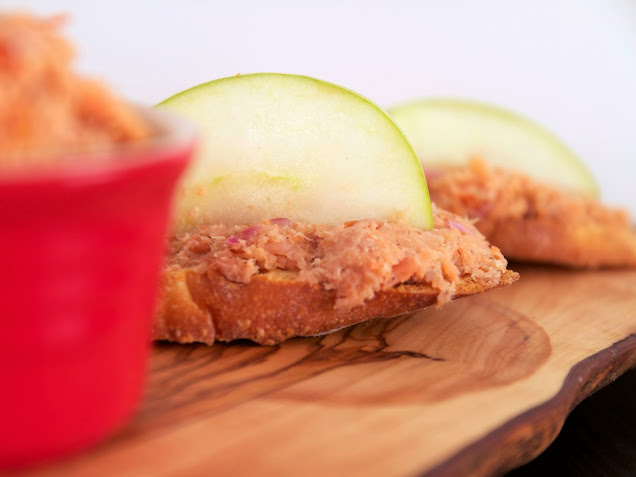
Rillettes are not a common food in America, but the French have long known how wonderfully rich this appetizer or snack can be when served on top of a toasted slice of bread or warm crostini. Rillettes are generally a meat spread that is very similar to a pate. Modern takes on the rillette include duck, rabbit, goose, seafood, or even vegetables which with fats or oils and stored in a jar or ramekin. (Ruhlman and Polcyn).

Originally, the rillette was the meat and/or liver from a pig which was cooked in its own fat over a long period of time, also known as confit. The fat enriched meat would be stuffed into jars and heavily salted. This would make it difficult for bacterial growth within the rillette. The meat would then be covered with excess rendered fat (French Country Food). Once the layer of fat hardened the rillette was protected from oxidizing and bacterial growth. This preservation method was common in the French countryside and the rillette was considered peasant food.

The rillette was an innovation of practical sustainability to keep pork consumable well after slaughter. The spirit of peasants not being wasteful meets modern conservationist in this recipe. In honor of this cross-section I developed the spread to fit the smoked trouts flavor profile as opposed to that of smoked eel. For this reason I introduced fresh horseradish into the dish. Horseradish only grows in northern climates where there is a strong winter (Wilde). The trout, tart apples, and horseradish which are the three boldest ingredients in this dish are all commonly found in the Midwest, specifically in Indiana. The dish is locally sourced, environmentally conscious, and filled with interesting and delicious flavors.

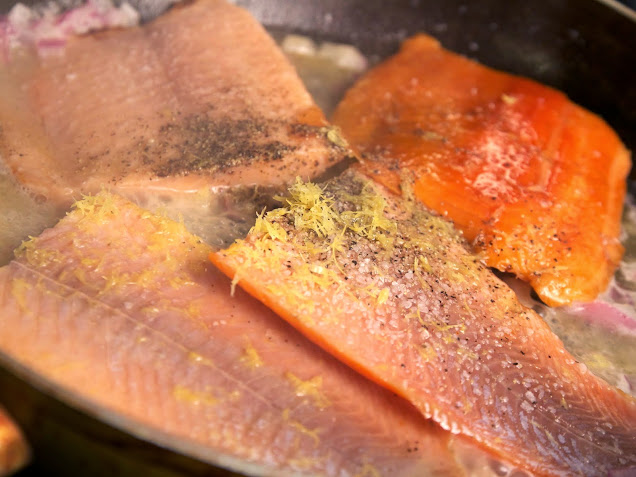
Trout in Butter

Smoked Trout Rillette with Quick Lemon Pickled Apple 


Smoked Trout Rillette with Quick Lemon Pickled Apple

Ingredients
  • 1/2 c Unsalted butter
  • 2 T Horseradish, freshly grated
  • 2 T Shallot, minced
  • 1/2 pound (8 oz) Smoked trout(remove skin for another use)
  • 1/4 c White wine
  • 1/2 t Lemon zest
  • 1 t Kosher salt
  • pepper to taste
Cooking Directions
  1. Melt butter. Add shallot until soft, but don't brown. Add trout, wine, lemon zest, salt and pepper. Cook between 5-8 minutes, then let come to room temperature.
  2. Transfer to mixing bowl or low power food processor, mix until a smooth paste then transfer to ramekin.
Quick Lemon Pickled Apple
Ingredients
  • 1/2 Green apple, thinly sliced
  • 1 Lemon, juiced & zested
  • 1 t Kosher salt
Cooking Directions
  1. Put thinly sliced green apple pieces into a small bowl. Cover with the juice and zest from one lemon and salt. Let rest for at least 30 minutes.
Total Time: 30 min Citations and Further Readings:
  • "Rillettes." French Country Food. N.p., n.d. Web. 11 Jan. 2015. <http://frenchcountryfood.com/recipes/entrees/rillettes.html>.
  • Ruhlman, Michael, and Brian Polcyn. Charcuterie: the craft of salting, smoking, and curing. New York: Norton & Company, 2005. Print.
  • seafoodwatch.org. Monterey Bay Aquarium, n.d. Web. <http://www.seafoodwatch.org/>.
  • Wilde, Barbara. "Horseradish." Organic Gardening. N.p., n.d. Web. 11 Jan. 2015. <http://www.organicgardening.com/learn-and-grow/horseradish>.
Photos from Jordan Henline
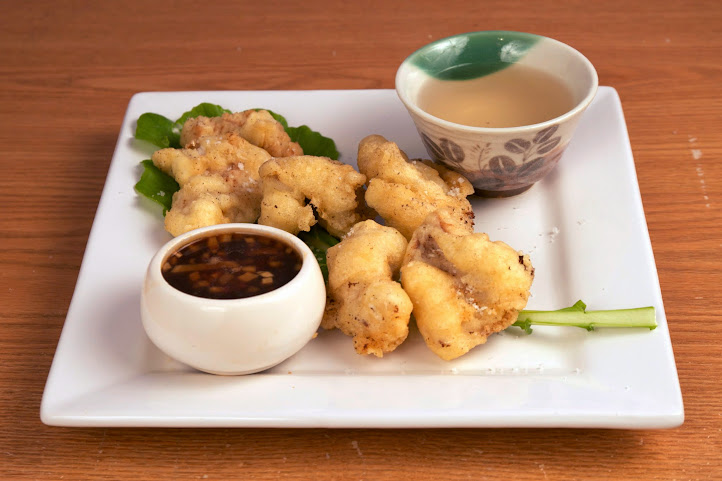
Catfish Tempura

I have fond memories from my youth of catching channel catfish in a neighborhood retention pond. Back in those days, catching catfish was only an after school hobby. Little did I know that later in life I would come back to this common catfish with a new found respect. Farm-raised catfish are very affordable, a pound of nuggets can cost as low as $4.99 depending where you purchase from. Catfish are also relatively healthy, They contain large amounts of Protein, Vitamin D, and Potassium, among other vitamins and Minerals (nutritionfacts.com). Catfish tempura is a cross-section of conscious, sustainable fishing and indulging in cherished culinary traditions.

Not all catfish are created equal. Catfish can be a great fish option, but it is important to keep an eye out and purchase farmed fish specifically from the US if possible. US cat-fisheries are highly regulated and managed in an environmentally healthy way (Seaver). In addition, they are raised on a primarily vegetarian diet including rice and soy beans. This diet helps control the flavor of the fish and eliminates the "muddy taste" of some wild caught catfish. Foreign caught or raised catfish like Swai, Tra, Basa, River or Striped catfish are not raised in the same regulated conditions as those of the US
(Seafoodwatch.org), so quality may vary significantly.

Corn-breaded and deep fried catfish have a rooted tradition in the the Southern United States. The popularity of this fish only continues to grow in the United States, reaching far beyond Mississippi and Georgia. I wanted to take this tradition of fried catfish and combine it with another frying tradition, that of tempura. Tempura is a regarded style of airy deep frying which is generally associated with Japanese cuisine. Interestingly enough tempura's origins lie in Portuguese cuisine. Portuguese missionaries introduced the tempura style to Japan back in the 16th century C.E.(Moreida).

Despite appearing as a seemingly simple preparation, tempura really does involve a heightened attention to technique. One of the keys to a light and airy tempura is using very cold, carbonated water. When cold water is added to the other elements of the tempura batter it creates a more viscous mixture and holds onto the fish better. The carbonated liquid allows more gas in between the gluten networks for a lighter batter. Finally, by working quickly and not over-mixing the batter, the flour particles will not have enough time to fully soak up the liquid, the result is a crispy and uneven and lacy crust (McGee 214).

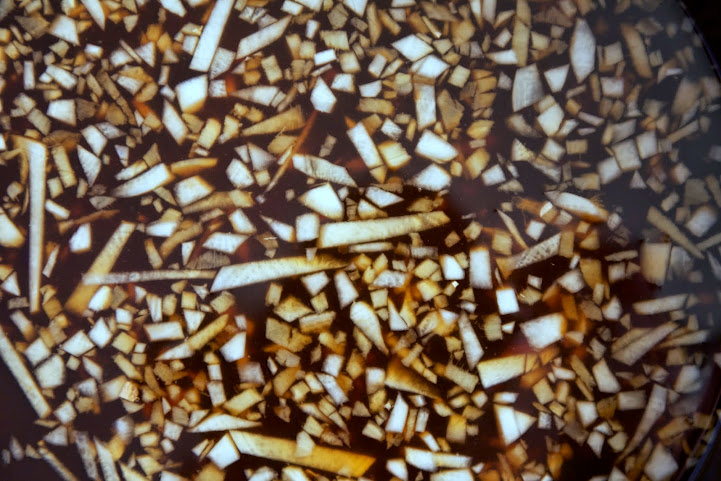
Every fried food deserves a good sauce. A sauce like soy sauce or ponzu would work well here, but I wanted to make a sauce based off of the Japanese tentsuyu, which is generally considered an all purpose sauce. The preparation is pretty simple and the result is a blend of sweet, salty, savory, spicy. I would suggest preparing the dashi (first sea stock) in advance. If you are unfamiliar with dashi, there are variances on stock but at it's most basic form it's kelp and dried tuna flakes. Dashi, and other Japanese stock recipes can be viewed in This Dashi Guide.
Sauce


Catfish Tempura with Tempura Dipping Sauce


Masaharu Morimoto Tempura Batter (The New Art of Japanese Cooking)

Ingredients
  • 2 Large egg yolks
  • 1/2 c Vegetable oil
  • 1 & 1/2 c Seltzer water, chilled
  • 2 c Tempura flour (All-purpose can be substituted)
Cooking Directions
  1. Beat the egg yolks in a bowl
  2. Slowly whisk in the oil until blended
  3. Add the tempura flower and stir with chopsticks until just combined. (residual flour on top is okay, Don't overmix!)

Dashi Tamari Tempura Dipping Sauce

Ingredients
  • 1 c Dashi
  • 2 T Tamari(Use 2.5-3 T if substituting soy sauce
  • 2 T Hoisin sauce
  • 2 T Ginger, minced
  • 2 T Daikon, minced
Cooking Directions
  1. Mince ginger and daikon.
  2. Add all ingredients to a small sauce pan over medium heat.
  3. Cook for 15-20 minutes on medium.

Catfish Tempura

Ingredients
  • 1 pound Catfish nuggets
  • Tempura batter
  • Enough High heat oil to fill a heavy bottom pan 3-5 inches
Cooking Directions
  1. Preheat oil to reach 350-370F
  2. Dust catfish nuggets in AP flour
  3. Quickly dredge nuggets in tempura batter and lightly drop in the oil
  4. Cook 3-5 minutes or until the nuggets are floating and the batter is golden brown.
  5. Transfer catfish to a paper towel and dry off as much oil as possible.
  6. Season with salt and pepper and enjoy.
Total Time: 30 min
Citations and Further Readings:
  • "Catfish Recommendations." seafoodwatch.org. Monterey Bay Aquarium, n.d. Web. 10 Dec. 2014. <http://www.seafoodwatch.org/seafood-recommendations/groups/catfish/overview?q=Catfish>. McGee, Harold. On Food and Cooking. New: Scribner, 1984. 214. Print. 
  • Moreida, Takashi. "Tracking Down Tempura." Ed. Moreida. Kikkoman, n.d. Web. 10 Dec. 2014. <http://www.kikkoman.com/foodforum/thejapanesetablebackissues/06.shtml>. 
  • Morimoto, Masaharu. Morimoto: The New Art of Japanese Cooking. N.p.: DK Publishing, 2007. 260. Print. 
  • "Fish, catfish, channel, wild, raw." Nutritionfacts.com. Nutrition Facts, n.d. Web. 10 Dec. 2014. <http://nutritiondata.self.com/facts/finfish-and-shellfish-products/4036/2>.  
  • Seaver, Barton. For Cod and Country. New York: Sterling Epicure, 2011. 27. Print. 
  • Yoshizuka, Setsuko. "Tempura Dipping Sauce." About.com. About.com, n.d. Web. 10 Dec. 2014. <http://japanesefood.about.com/od/tempura/r/tentsuyu.htm>.
Photo's by Jordan Henline
Sardine and Anchovy Pate Many of the recipes I have developed for this site are both environmental and economically influenced. I personally believe that the more we learn about our world, our environment, and those life forms that share this planet with us, that we are able to make more balanced decisions. I am a fish lover and given the opportunity to fish sustainably and in water without chemical pollutants then I would probably eat fish for every meal. Unfortunately that is not a realistic possibility. But, what if I told you there is a healthy, tasty, sustainable, inexpensive fish option that can hold in the pantry for years? Canned sardines, are starting to sound like a magical food option.
In my research for sustainable fish options time and time again I found that experts continuously recommended eating smaller fish like sardines and anchovies. Granted usually experts recommend fresh, canned is the only option for a Midwesterner like myself. The sardines are low in most ecosystems food chain. They spawn frequently and in large numbers. (Monterrey Bay Aquarium) This is a more sustainable option than fishing apex predators like sharks and blue fin tuna, then replenishing the top of the food chain of the fragile ocean ecosystem is considerably more difficult.

Besides keeping the ocean healthy for later generations sardines are extremely healthy for us now. A 3.2 oz tin of Sardines in water contain a slew of vitamins, minerals, and omega fatty acids which are good for the heart, bones, sexual health of men, muscle health, and brain health. (Cooper) Also, at one or two dollars a tin anyone can afford to eat these tiny fish.

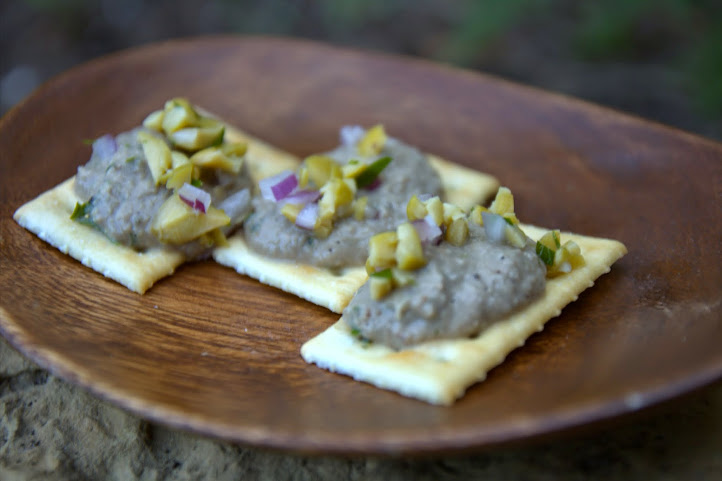
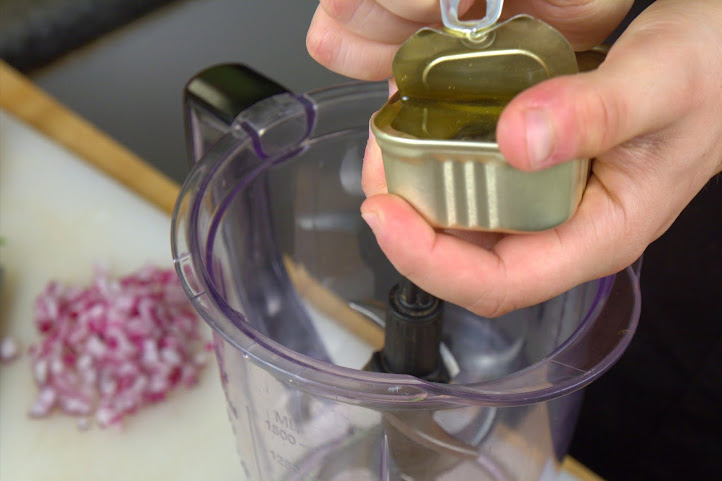
For this recipe I combine a tin of sardines with several anchovy fillets and process until the texture becomes a pate spread. These are excellent over crostini or with crackers. This can be made quickly while entertaining guests and pairs well with white wine or a wheat ale. So when you are considering your next inexpensive, easy, and healthy h'orderves look no further than to this sardine and anchovy pate spread.

Easy Blend


Sardine and Anchovy Spread

Ingredients
  • 1 Tin of sardines (save half of the oil)
  • 3 Anchovies packed in oil
  • 2 T Red onion, small diced
  • 1 T Lemon juice
  • 1 Garlic clove, minced
  • 1 T Fresh parsley, chopped
  • 1/2 t Black pepper
  • 1/4 t Kosher salt
Cooking Directions
  1. Combine all ingredients into a blender including 1/2 of the oil the sardines were packed in. Blend until pate consistency.
  2. Scoop onto crostini or crackers of your choice.
Total Time: 10 min
Citations and Further Readings:

  • Cooper, Craig. "Sardines: A superfood for men." Easy Health Options. N.p., 11 Sept. 2014. Web. 11 Sept. 2014. <http://easyhealthoptions.com/sardines-superfood-men/>.
  • "Pacific sardine." Monterey Bay Aquarium, n.d. Web. 11 Sept. 2014. <http://www.montereybayaquarium.org/animal-guide/fishes/pacific-sardine>.
Photos by Jordan Henline