
Showing posts with label Sous Vide. Show all posts
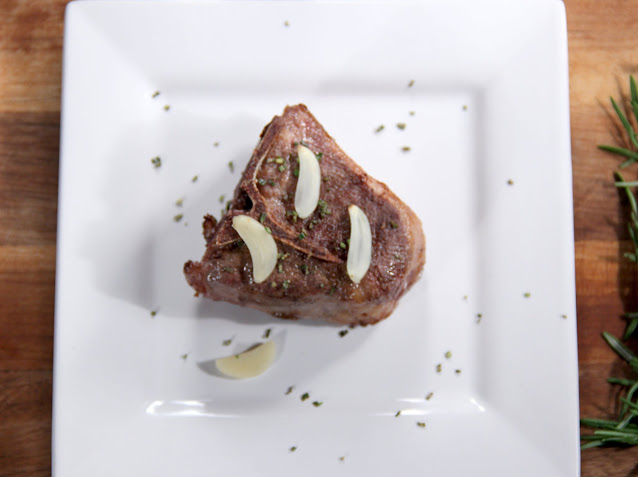
sous vide lamb chop

I've recently received several requests to demonstrate usages and techniques of the immersion circulator. Precise water baths and sous vide cooking is not yet common in most home kitchens but it has many practical applications, I use sous vide in my home kitchen when I want to precisely cook a tender and lean peice of meat, as a replacement of steaming vegetables because the nutrients are retained, and to cook food when I know I'll be busy; cooking sous vide allows for a large margin of time for food to spend in the water bath without overcooking or changing the texture of the cooked item. For some of my earlier posts on sous vide check out Sous Vide Venison Loin with Hazelnut Maple Coffee Butter and the Hot Spring Egg (Onsen Tamago).

I decided to take a more classic approach on this dish by focusing on the beloved flavor trinity of lamb, garlic, and rosemary. This dish demonstrates that by embracing new technologies and approaches to a craft, exciting and successful innovations are to be found at every turn. This dish is also very easy to recreate with similar consistency time after time, this is thanks to the precision of sous vide cooking.

Lamb is both environmentally and culturally an interesting source of nutrition. Lamb is an important source of protein throughout Europe, Australia, New Zealand, and the Middle East, and has been for a very long time in many of these regions. Lamb is largely consumed in countries which are heavily populated by Muslims(Manyfold Farms), this is due to the religious laws of halal which allow for lamb and beef consumption but not pork. I also believe lamb are historically important to Europe and the Middle east due to the fact they were domesticated in the region around 10,000 BC(Claeys), which would date the animal being an important food source in the region for roughly 12,000 years.

Interestingly, lamb consumption only accounts for about 1% of the meat consumption in the United States(EWG). Despite lamb's lack of popularity in the United States, lamb production is an important issue to have awareness of, per pound lamb production is the largest agricultural product contributing to releasing greenhouse emissions. Take a look at This Meat Eaters Guide for a better understanding of what and how these agriculture products add to greenhouse emissions. Awareness is the first step to more responsible consumer actions.

I am not making the argument that lamb should totally be eliminated from ones diet due to the high release of greenhouse emissions, but spreading awareness may help with the future supply and demand of lamb. That being said, lamb is a rare treat and should be thoroughly enjoyed when acquired. Local lambs are generally quite expensive per pound and can be found at farmers markets throughout the country. Considering the price and environmental issues with producing lamb, reserving this meat as a rare treat makes this dish all the more special.
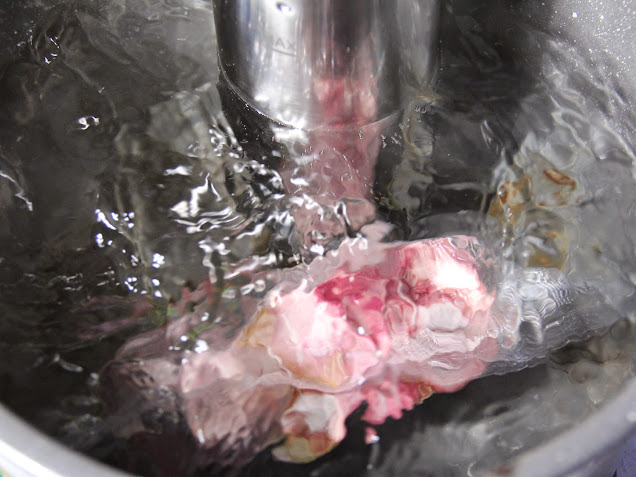
sous vide lamb chop

Sous Vide Lamb Chops with Pickled Garlic


Ingredients
  • 2 Thick lamb chops
  • 2 T Butter, and more to sear the lamb chops
  • Rosemary, reserve enough rosemary to finely mince
  • Pickled garlic, purchased or home-made
  • salt and pepper
Cooking Directions
  1. Lightly salt both sides of the lamb chops.
  2. Vacuum seal lamb chops, butter, and one sprig of rosemary together. Ensure that the seal is complete.
  3. Preheat your immersion circulator or other water bath option to 140 F for a medium cooked lamb chop. 115 for rare, 130 for medium-rare, 145 for medium-well, or 150 F for well done. (This recipe is timed for a medium cooked lamb chop)
  4. Let the lamb sit in the water bath for 1 hour and 30 minutes.
  5. Remove the bag from the water bath and thoroughly dry with a paper towel so the surface moisture is gone.
  6. On a stovetop melt butter or oil of choice in a cast iron skillet. (Any pan is fine)
  7. Sear the exterior of the lamb chop until a brown crust forms, roughly 30 seconds per side, but may vary depending on cooking set-up.
  8. Once the meat is browned plate by sprinkling over finely minced rosemary, sliced pickled garlic, and salt and pepper to taste.
Total Time: 2 hours
Citations and Further Readings:
  • Claeys, Matthew C. " Sheep Facts." Department of Animal Science. Ed. Lori McBryde. NCSU, n.d. Web. 24 Mar. 2003.

  • "Climate and Environmental Impacts." Meat Eater's Guide. EWG, n.d. Web. 15 Mar. 2015. <http://www.ewg.org/meateatersguide/a-meat-eaters-guide-to-climate-change-health-what-you-eat-matters/climate-and-environmental-impacts/>.
  • "How To Eat Lamb." Manyfeld Farms, 1 Sept. 2012. Web. <https://www.manyfoldfarm.com/blog/2012/09/how-to-eat-lamb/>.
  • Sous Vide Venison Loin with Hazelnut Coffee Maple Butter
    Venison is a very lean meat yet high in moisture. In addition to already being lean, the fat of the Venison can ruin the flavor with an overly gamey taste. If cooking all the way to well done, the texture becomes mushy and quite unappetizing. The general consensus is quickly cook venison on high heat and leave it nice and pink in the middle. This is a highly problematic way to eat wild Venison, this is because of a nasty little parasite known as Trichinella. The USDA has tests and procedures to help protect consumers from known pathogens in Deer and many other game animals. (USDA, 2011) However, there is no way to ensure wild game is thoroughly tested. Trichinella can be found in wild game including Venison, Bear, and Boar to name a few, and I highly recommend using caution when cooking these meats.

    There are two steps to follow when cooking wild Venison. First, you need to make sure the meat is frozen for at least 3 weeks before you consume. Secondly, According to the USDA if you cook to medium like I do, make sure to hold your meat for at least 12 minutes at 140°F once completely cooked through. (Myhrvold, 2011) The possible dangers of cooking wild game shows why cooking the tenderloin sous vide is an appropriate method to maintain perfect moisture, flavor, and achieve pasteurization.

    I believe cooking Venison loin sous vide is a good idea, but you might be asking what exactly is sous vide and why is it tied in with the molecular gastronomy movement? to clarify sous vide is the technique of vacuum sealing a food and placing it in a temperature controlled water bath, it is the most accurate way to control the internal temperature of whatever is being cooked be it produce or protein. Chef Jason Wilson will demonstrate with this excellent sous vide video . There are several various sous vide machines on the market, I am a proponent of immersion circulators, due to their flexibility. For more Joy and Feast examples of sous vide and water bath cooking check out Onsen Tamago(Hot spring egg) and Sous Vide Lamb Chops with Pickled Garlic. 


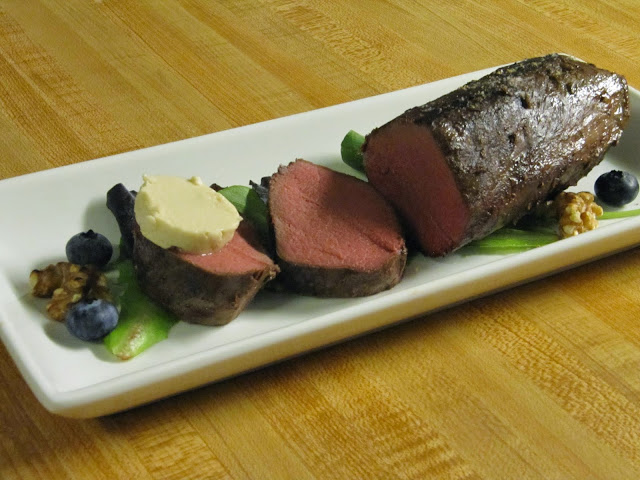
    Sous Vide Venison Loin w/ Hazelnut Coffee Maple Butter 


    Sous Vide Venison Loin

    Ingredients
    • 1 Venison Loin
    • 3 Garlic cloves
    • Healthy coating of Kosher salt
    • Healthy coating of Ground black pepper
    • 1 T Cumin seed
    • Butter or fat of choice
    Cooking Directions
    1. Preheat immersion circulator, Sous Vide machine, or other Sous Vide set up to reach 140°F.
    2. Take your Loin and generously cover with Salt, Pepper, and Cumin Seed. Thinly slice cloves of garlic and place on the loin.
    3. Place in bag and vacuum seal or remove the air via the water displacement method as demonstrated in the ChefSteps video.
    4. Place the bag in your water bath and set a timer for 2 hours. The time you need to cook the loin depends on its thickness. The Sousvide Supreme Cooking Guide is a handy quick reference for consulting cook times.
    5. After the timer goes off, take the loin out of the bag, and pat dry with a paper towel.
    6. Heat up your cast iron (or any pan) until it has an opportunity to get nice and hot, then add the fat of your choice, a medium-high heat fat is always a good idea, but butter can be used if you are cautious.
    7. Sear all the edges of the venison loin for about 30 seconds a side until golden brown. Times will vary depending on heat of cooking fat.
    8. Season with salt and pepper, and slice into medallions

    Hazelnut Coffee Maple Compound Butter

    Ingredients
    • 1/4 c Unsalted butter
    • 1 & 1/2 T Cool hazelnut coffee
    • 1 T Maple syrup
    Cooking Directions
    1. Pour cool Hazelnut coffee (you can substitute plain coffee), Maple Syrup, and diced Butter into a small food processor. Blend until thoroughly mixed.
    2. With a rubber spatula scrape out butter mixture onto wax paper, roll into a cylinder and place in the refrigerator for 1 hour or longer.
    3. Remove from the refrigerator and let it come to room temperature. Slice when serving.
    Total Time: 2 hours 15 min

    Citations and Further Readings:
    • "Game from Farm to Table." http://www.fsis.usda.gov. USDA, May 2011. Web. 15 Apr. 2014.
    • Hoffman, L. C., and Eva Wiklund. "Game and venison–meat for the modern consumer." Meat Science 74.1 (2006): 197-208.
    • Kimball, Yeffe, and Jean Anderson. The art of American Indian cooking. Globe Pequot, 2000.
    • Myhrvold, Nathan. Modernist cuisine. Taschen, 2011. Vol 1. 120-122
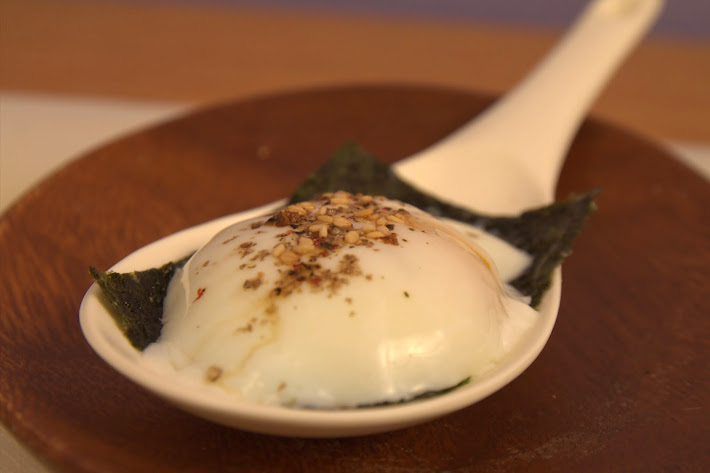
    Onesen Tamago, ontop of nori. Topped with smoked salt, cracked pepper, and sesame seeds Onsen Tamago is a traditional Japanese way of cooking a slow poached egg. Traditionally, Japanese people would bring eggs to local hot springs heated by the volcanic activity on the island. They would put their eggs in the hot spring water and take them out 40 minutes later to have perfect Onsen Tamago or Hot Spring Eggs. (Salat) Debate of the perfect temperature ranges from 145 F and 160 F and the 15 degrees make a huge difference. 148-150 F is perfect for an extremely soft egg white and custard-like yolk.

    This recipe is so important because it is one of the most simple ways to demonstrate water bath cooking. water bath cooking is an ever growing important technique in cooking all sorts of food. What makes cooking in a water bath different from poaching or boiling food is the precise control in temperature and time. There are also specific pieces of equipment used to achieve holding the desired temperature. There are others on the internet who have explained water bath equipment better than myself so please check this link for Modernist Cuisine Made Easy’s in depth explanation of water bath equipment

    Water bath’s are the dumb cousin to the technique I will be referring too later on known as Sous Vide. Sous Vide cooking involves a precise water bath with the addition of food being cooked in a vacuum sealed bag for maximum flavor and minimal oxidation to the food.

    Onsen Tamago


    Ingredients
    • Chicken eggs
    Cooking Directions
    1. Heat your waterbath via any sous vide technology to 148F and carefully lower eggs in with a slotted spoon.
    2. Remove eggs after 40 minutes, serve.
    Total Time: 45 min

    Citations and Further Readings:
    • Salat, Harris. "Onsen Tamago, or poaching eggs in their shell." Japanese Food Report. N.p., 28 Dec. 2012. Web. 15 June 2014.
     Photos by Jordan Henline