Showing posts with label Vegetarian. Show all posts

Preserved Lemons over Salad

Having a well-stocked pantry and fridge can make or break the home cooking experience. Staple condiments provide comfort, and may bring sweetness, saltiness, sourness, brightness, or spiciness to an otherwise bland meal. Today's recipe is a pantry staple all over the world, and for good reason. Preserved lemons are easy to make and stretch the beloved lemon throughout the months which they are out of season.

The origins of preserved lemons date back to at least Roman times, but likely much earlier (Soyer, 110). They can be found in cuisines in the geographic span of Morocco to India. (Sonneman, 34) I most commonly associate the pickled citrus with North African stews and Moroccan tagine. North African food is vibrant with bold spices and colors; that is why ingredients like preserved lemons should be in every self-respecting home cook's repertoire.

So today we start preserving lemons! The unique fragrance of preserved lemons will add a distinct brightness to home cooked North African, Middle Eastern, or South East Asian dishes. Besides lemons, another citrus may be used in this pickling method. Limes, Grapefruit, and even oranges can be salted, cured, and allowed to ferment in their juices to extend their lifespan. Just like other pickles, spices may be added to preserved citrus to alter the flavor.


Preserved Lemons

Ingredients

  • Your preference Lemons
  • Box Coarse Kosher salt
  • Your preference Mason Jars
Cooking Directions
  1. Clean Mason jar(s), and allow to dry.
  2. Pour roughly 1 T of salt, or enough to create a layer into the bottom of the dry jar(s).
  3. Cut the tops off of all lemons, and quarter without cutting all the way through.
  4. Add a large pinch of salt in the center of the cut lemon and rub.
  5. Press down and allow some juice to come out. Give the jar a good shake and place in a dark area like a cupboard or drawer away from direct sunlight.
  6. After three days, remove and with a wooden spoon or other long-handled tool press the lemons to release the rest of their juices. If the leftover juice does not fully submerge, the lemons add fresh lemon juice on top.
  7. Place back in the same spot and allow the preserved lemons to ferment for one month.
  8. The preserved lemon rind also known as peel will be good to use indefinitely. Refrigerate and enjoy as needed.
Total Time: 1 month+

Citations and Further Readings:

  • Sonneman, Toby. Lemon: A Global History. London: Reaktion Books Ltd, 2012. Print.
  • Soyer, Alexis. The pantropheon, or, History of food, and it's preparation: From the Earliest Ages of the World. Boston: Ticknor, Reed, and Fields, 1853. Print. 


      Welcome back to Joy and Feast. As you may have noticed the website and format, have changed, and I believe it is even better! I am extremely excited to be back and working on new content which includes videos for each post. I wanted to kick off the first post of 2016 with a recipe influenced by a friend I met two years ago around this time.

      My friend in Berlin let me stay at his apartment for about a week over new years in 2013-2014. He knew that because I was a cook, I would be able to prepare one of his favorite dishes, which happened to be anything cooked Au gratin. Au gratin is a French term which essentially refers to a browned crust left behind by a sharp cheese or bread crumbs. (cookthink.com) Most commonly an Au gratin dish refers to potatoes, pasta, or vegetables that are mixed in a bechamel sauce, topped with breadcrumbs, and then baked in the oven or placed under a broiler.

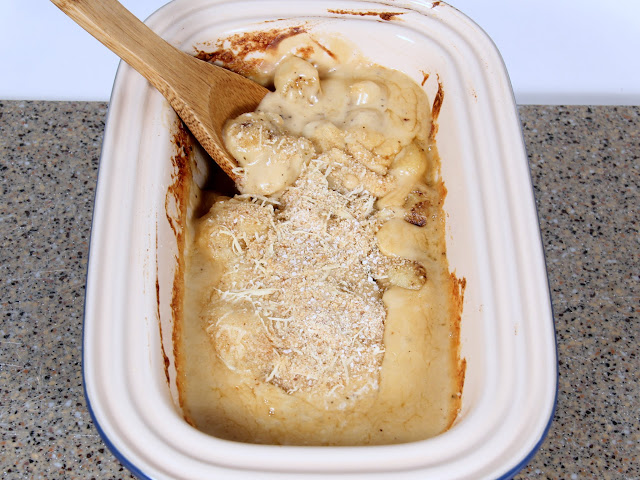
      Gratin dishes might be more common than one would think. Many Americans love gratin dishes like macaroni and cheese, perhaps thanks to the common boxed versions with powdered cheese. Gratin can be much, much better than a blue box of mac n cheese, and this Beer and Cheese Gnocchi Gratin proves it. I would imagine that my friend in Berlin would approve.


      Beer and Cheese Gnocchi Gratin


      Ingredients

      • 2 c Precooked gnocchi (or substitute fresh)
      • 2 T Unsalted butter
      • 2 T All-purpose flour
      • 4 c Whole milk
      • 1 c Amber Ale(or substitute a wheat ale)
      • 2 c Shredded cheese(I used Cheddar and Swiss)
      • 2 t Kosher salt
      • 2 t Black pepper
      • 2 t Nutmeg
      Cooking Directions
      1. Bring a pot of salted water to a boil. Cook 2 c packaged gnocchi until they float to the surface of the boiling water, strain and set aside.
      2. Melt 2 T of butter over medium heat, once melted slowly add 2 T of all-purpose flour while continuously whisking.
      3. When the roux is a thick consistency add 4 c of Whole milk and continue to whisk.
      4. Once the roux is incorporated into the milk, add 1 c of amber ale to sauce, whisk continuously.
      5. Add 2 c of shredded cheese in several batches. Whisk the whole time until the sauce is smooth.
      6. Add 2 t of Kosher salt, black pepper, and nutmeg to the beer and cheese bechamel sauce, when fully mixed take off of heat and reserve.
      7. Heat up a skillet, take the reserved gnocchi and lightly saute in butter. Once browned add to an oven proof dish and combine with beer and cheese bechamel sauce.
      8. Add freshly grated Parmesan cheese and bread crumbs over the top of your gnocchi and sauce mixture. Cook in the oven for roughly 30 minutes. To achieve a very brown crust, place the baking dish under the broiler for a few moments. Watch until you are satisfied with the color.
      Total Time: 1 Hour

      Citations and Further Readings:

      • "What is gratin?." Cookthink. N.p., n.d. <http://www.cookthink.com/reference/926/What_is_a_gratin >.
        Fried Green Tomatoes
        Winter is undeniably approaching. Southern Indiana has already seen one night in which temperatures dipped below 32F. The frost destroyed a large variety of plants including my precious tomato vines. Instead of dreading the inevitable barren season to come, I wanted to write an article about how we can still get great food in our post-frost world.

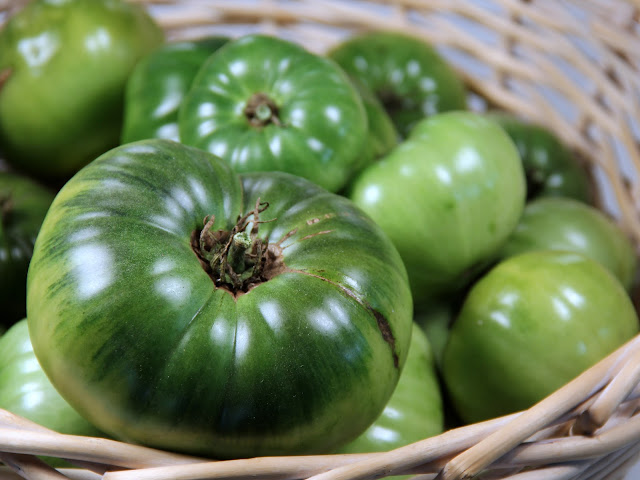
        Throughout the United States, one of the most common garden plants grown for food is the tomato. Tomatoes sugar content, acidity, and size all depend on the breed and growing conditions of the plant. A grape tomato and beefsteak tomato have considerably different usages. Tomatoes do share a common development cycle. All varieties of tomatoes start off as immature, hard, tart green fruits and only after maturating, they change color and develop unique flavors.

        However, if a tomato plant is unprotected in a below freezing environment, its vines will wilt and die. This seasonal event leaves many gardeners with a lot of unripened tomatoes. There are techniques to ripen green tomatoes such as; sun ripening, by storing green tomatoes on a window sill in direct sunlight, or ethylene ripening, this is done by storing green tomatoes in a closed bag with an ethylene producing fruit. However, green tomatoes have culinary validity in their own right!

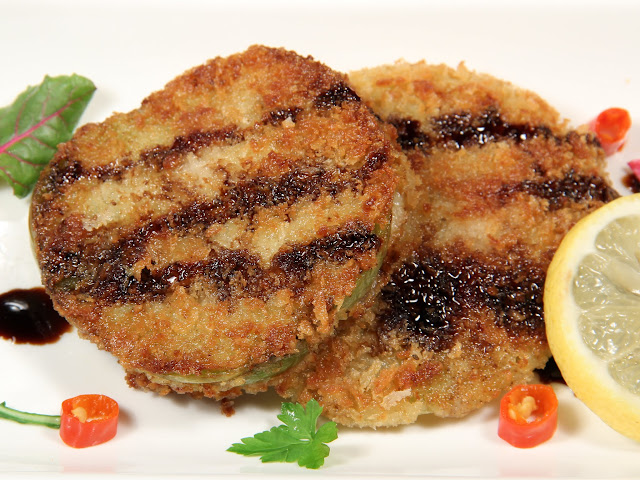
        Fried green tomatoes are a common usage of the unripened fruit. When cooked, they become tender yet remain flavorful. You may beer batter, tempura batter, use bread crumbs, crackers, or any other variation of breading or battering food that you prefer.

        Many of us think of fried green tomatoes as a recipe developed in the Southern United States, and this is primarily due to the novel and film Fried Green Tomatoes which takes place in Alabama. Lisa Bramen from Smithsonian.com has found that fried green tomatoes started to appear in the United States in the North and Midwest, and were most likely the contribution of Jewish immigrants from the mid 19th to early 20th century. Regardless of who can claim ownership of fried green tomatoes, they only seem to be gaining in popularity. Fried green tomatoes are another instance of practicality becoming a valued American food tradition.

        Green Tomatoes


        Fried Green Tomatoes

        Ingredients
        • 6 Large green tomatoes
        • 1/4 c Buttermilk
        • 2 Eggs, whisked
        • 1 c All-purpose flour
        • 2 c Panko bread crumbs
        • 5 T Old Bay seasoning
        Cooking Directions
        1. Slice green tomatoes, about 1/4-1/2 inch thick.
        2. In a bowl beat eggs and buttermilk together.
        3. On a separate plate mix flour and Old Bay seasoning together.
        4. On yet another plate spread Panko.
        5. Take a slice of tomato and dredge in flour, then coat it in the egg mixture, and finally coat with Panko crumbs. Carefully set breaded tomato on a sheet pan lined with wax paper.
        6. Repeat the process until all tomatoes are breaded, then stick in the freezer.
        7. One hour to indefinite, remove the frozen tomato and prepare oil to fry. You want to make sure and use a high heat oil and get it near its smoking point. The frozen tomatoes will instantly drop the temperature of the oil, so this part is crucial.
        8. Fry the tomatoes until golden brown and remove to a plate lined with paper towels. Make sure to absorb as much oil as possible and serve immediately to avoid soggy tomatoes.
        9. *The frozen tomatoes will last over the winter, fry off as desired.
        Total Time: 2 Hours

        Citations and Further Readings:

        • Braman, Lisa. "The Surprising Origins of Fried Green Tomatoes." Smithsonian. Smithsonian, 6 Aug. 2010. Web.
        Cornbread
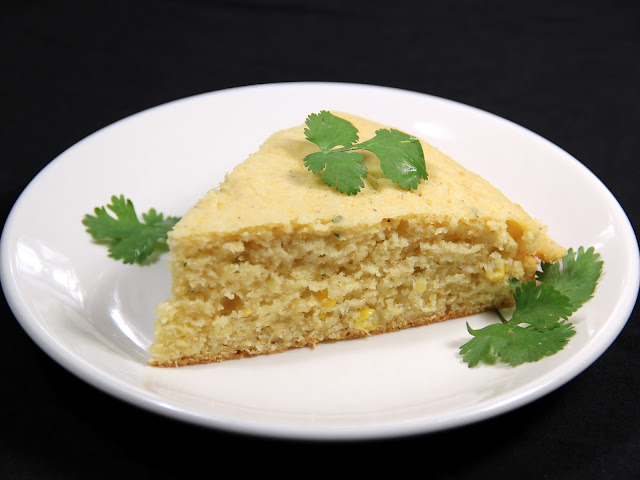
        In the United States, there is a term to refer to something that is inherently a foundation in American culture. The phrase goes "____ is as American as apple pie".  After a recent enlightening trip to a Native American history museum in Phoenix, Arizona I discovered there are things more American than apple pie, corn, for instance, has been an integral crop in culinary traditions throughout the Americas for millennia. I am going to start thinking of things which are distinctly American, "as American as corn bread."

        Corn also known as maize has been one of the key crops throughout North and South American history. The Incas, Mayas, Aztecs, Pueblo builders and even the native tribes that had first contact with Europeans relied on corn as a staple food. (McGee 477) In addition to fresh corn, it was also ground down into corn meal and used as the basis for flatbreads, raised breads, and made into grits. Essentially the cultivation of corn and development of corn recipes is as quintessentially American as any other food source imaginable.

        The cornbread in today's recipe is based on the Southern style cornbread, which is popular throughout the South Eastern United States. Southern Cornbread has roots in Native American, European, and African culinary traditions. Native Americans, settlers, and slaves all were known to cook corn cakes due to the low cost and ease of production. Early European settlers called cornbread "hoe cake" because they would dollop batter on the end of a hoe and leave it out in the sun to cook against the metal end of their hoe. (White)

        I call this recipe a corn cake because of the moisture content of the finished product. The vegetable oil in this recipe keeps the cornbread soft and moist, more than other corn bread recipes. Cornbread is a hearty side dish which can easily feed a small group. It only takes about 30 minutes, and the aroma of anything freshly baked fills up a room and whets appetites.

        Cornbread


        Cheddar and Herb Corn Cake

        Ingredients
        • 1 & 3/4 c All-purpose flour, sifted.
        • 1 c Cornmeal
        • 1 c Previously cooked corn kernels
        • 1/2 c Shredded cheddar cheese
        • 2 t Baking Powder
        • 1/4 t Baking soda
        • 3/4 t Kosher salt
        • 1 & 1/4 c Buttermilk
        • 1/4 c Melted & cooled butter
        • 1/4 c Vegetable oil
        • 1 Large egg
        • Several sprigs of rosemary, thyme, and sage. Minced
        Special Equipment: Cast iron skillet

        Cooking Directions
        1. Preheat oven to 375F, keep cast iron in the oven to heat up as well.
        2. While preheating mix flour, cornmeal, baking powder, baking soda, salt, corn kernels, cheddar cheese, and herbs into one bowl.
        3. In a separate bowl whisk your wet ingredients together, the buttermilk, liquefied butter, vegetable oil, and egg.
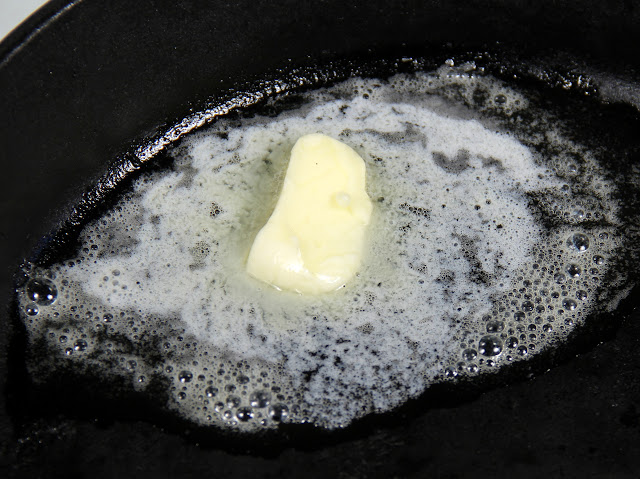
        4. When the oven is preheated take out your cast iron and add a small amount of butter, enough to coat the entire pan. Be careful not to burn yourself.
        5. Pour the liquid bowl into the dry bowl and mix with a wooden spoon until incorporated, do not overmix.
        6. Pour the batter into the cast iron skillet and transfer back into the oven.
        7. Let cook for 25 minutes, or until a toothpick can be inserted and removed from the center without removing any batter.
        8. Let rest for one minute then flip and transfer to a wire rack to cool.
        9. Serve as either wedges or squares with a dollop of butter.
        Total Time: 35 min
        Citations and Further Readings:
        • McGee, Harold. On food and cooking: the science and lore of the kitchen. Simon and Schuster, 2007.
        • White, Joyce. "Cornbread: The Evolution of a Recipe." A Taste of History. N.p., 2011. Web.
        Gimbap

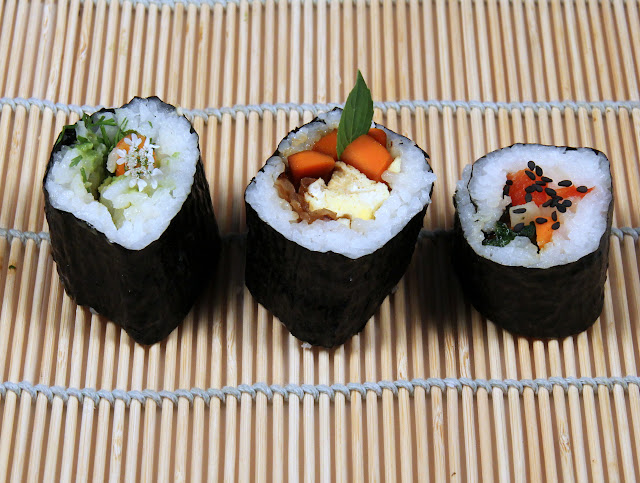
        I love sushi. Most of my friends also love sushi, it is amazing that uncooked fish and vinegared rice have become such an important part of the modern culinary landscape of America. However, if you are like me, making quality sushi at home is a fairly unobtainable prospect, still I still want what I want. I am not a master sushi chef, nor do I have an expansive Japanese pantry or access to the highest quality fresh fish. That being said, not all is lost, Korea's gimbap also called kimbap is an evolution of maki sushi, and it is much friendlier to the home cook. In fact, I consider gimbap incredibly valuable as an option to break from the monotony of packed lunch sandwiches. Gimbap has its own practiced traditions and serving establishments, for all practical purposes you can fill gimbap with pretty much anything you have on hand.

        Essentially, gimbap is a Korean cross between omaki(sushi rolls) and a sandwich. While maki is generally filled with raw fish and served with soy sauce, pickled ginger, and wasabi. Gimbap can be filled with either raw or cooked ingredients. Bulgogi and sauteed spinach gimbap, Why not? Hot dog and American cheese gimbap, probably shouldn't, but you could! The filling combinations are endless, just make sure to remove excess moisture so gimbap stay's dry. (Ha, 25)

        If you apply a local and seasonal philosophy to what you stuff in your gimbap, you are most likely going to be successful. The rice in gimbap can either be seasoned or left plain, and if you choose the latter, the ingredients will really speak for themselves. If you want to create the classic gimbap, the standard dollar gimbap known as Wonjo Kimbap is filled with spam( Mary Eats).

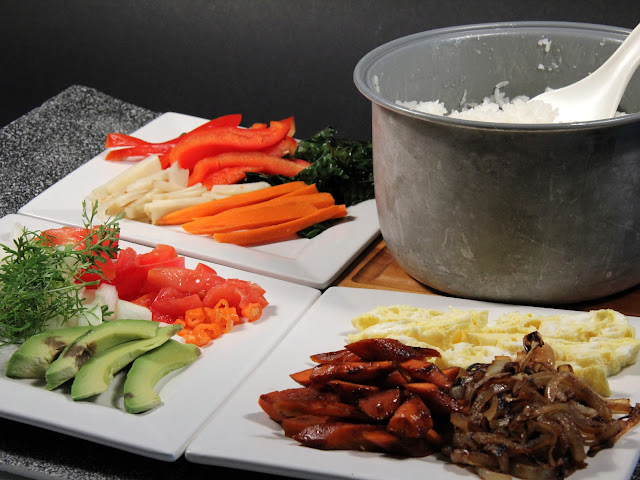
        *Today's post is a little different in that I provide the instructions on cooking and rolling the rice, yet I do not instruct on what filling you should use. You may follow my lead, but I suggest making your own gimbap creations with you have available.
        Gimbap


        Gimbap with Various Fillings


        Ingredients
        • 2 c Sushi (short grained) rice
        • 2 & 1/4 c Water
        • Nori (dried seaweed)
        • Rice Seasoning
        • 2 T Rice wine vinegar
        • 1 t Mirin
        • 3/4 t Sugar
        • 1/2 t Kosher Salt
        Additional Equipment:
        Electric rice cooker
        Bamboo rolling mat

        Cooking Directions
        1. Wash rice of any dust until water runs clear, then add to rice cooker.
        2. Add 2 1/4 c water and cook in the rice cooker until finished.
        3. Add rice wine vinegar, mirin, sugar, and salt. Fluff gently and let cool down until just warm.
        4. On top of a bamboo rolling mat add nori, cooked rice, and then your fillings.
        5. Roll, cut into segments (I do segments of 6), and store in a refrigerator until ready to use.
        6. Remember to remove excess moisture so that the gimbap stays dry.

          Fillings:

          (Sweet and Savory Gimbap) Molasses & Red Miso Roasted Carrot, Egg, & Caramelized Onion
          (Guac Gimbap) Avocado, Onion, Chili, Cilantro, Tomato
          (California Gimbap) Pickled Sunchoke, Bell Pepper, Julienned Carrot, Sauteed Kale,
        Total Time: 30 min
        Citations and Further Readings:
        • Ha, Christine. Recipes From my Home Kitchen. N.p.: Rodale, 2013. 25. Print.
        • Kang, Grace. "How to Make Kimbap." Serious Eats. Serious Eats, 23 July 2009. Web.
        • "Kimbap Nara Menu." Mary Eats. N.p., 16 Nov. 2006. Web. 
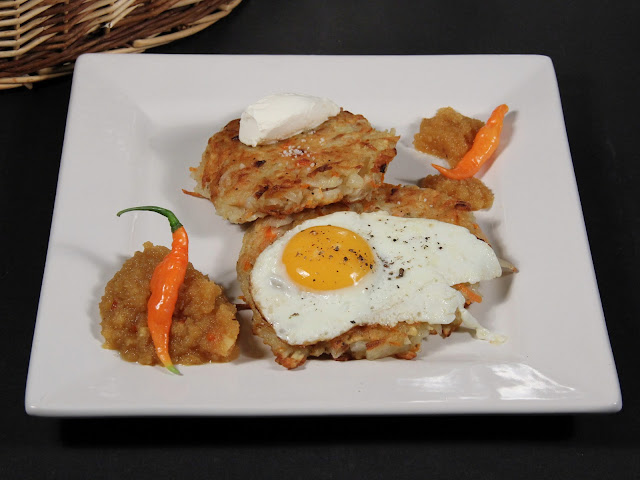
        Potato and Carrot Latke

        The total freedom of experimentation while writing Joy and Feast articles is extremely gratifying. Sometimes my experiments come from what produce I can source fresh, other times I find inspiration from a myriad of books or articles that cross my table. Sometimes I am able to explore food which has a significant meaning to me. Latkes or potato pancakes are a food that I have been acquainted with my entire life, I have wanted to write an article about them since I began this blog.

        Potato pancakes are consumed during the Jewish holiday of Hanukkah, this is actually a fairly recent tradition. Jews, particularly in Western Europe have been consuming fried cheese pancakes for Hanukkah since the late middle ages. It was not until the mid-1800's when a series of crop failures in Ukraine and Poland forced farmers to plant potatoes, a nightshade crop from the new world. Perhaps this abundance of potatoes influenced the adoption of potatoes in place of cheese pancakes during this period. Potato latkes have remained prominent ever since. (Avey) Fried potato pancakes span well beyond Jewish culture, potato pancakes are regularly enjoyed throughout Central and Eastern Europe, as well as in the Middle East.

        Often "traditions" or in this case traditional foods are confined to a dogmatic perception of culture, when in reality culture is fluid. Culture reacts to influences both internally and externally. Modernity has allowed cooks access to more information, ingredients, and communication than at any other point in human history. Lines have always been blurred, and we will continue down this path. Therefore, I believe that looking at one cultures "traditional food" through the lens of another culture can inspire some pretty creative and delicious meals.

        The lens that I envisioned today's recipe through took influence from India's great culinary tradition. Firstly, it is worth noting that the nation of 1.2 billion people (World Bank) has different cultural and food traditions depending on region within the country. India has influenced and been influenced by far flung cultures and empires for millenniums. The silk road encouraged the trade of spices in which eastern and western cultures passed through India and left their mark. In addition, India contains tropical (wet and dry), sub-tropical, and mountain climates allowing for a diverse spectrum of agrarian potential.

        What I love about Indian flavors is how the cuisine embraces pungency, spiciness, and boldness. A basic fresh apple puree, can become addictive with the right use of Indian spices. Garlic, ginger, and chili is a common trinity throughout tropical latitudes. Bold Indian flavors with Potato latkes make an unforgettable dish.

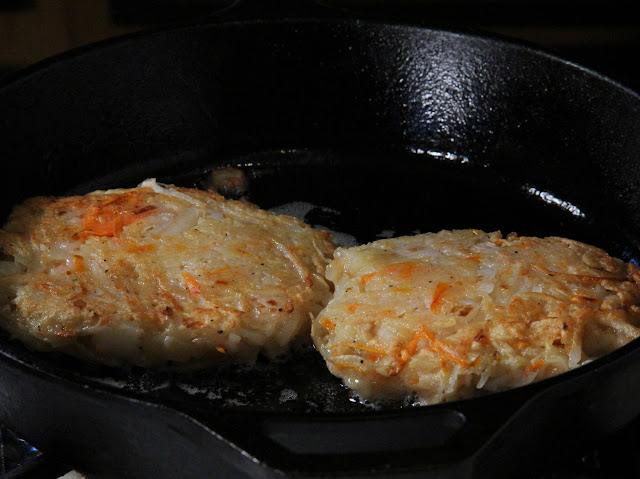
        Potato and Carrot Latke
        Potato and Carrot Latkes with Indian Spiced Apple Sauce


        Potato and Carrot Latkes


        Ingredients
        • 6 Russet potatoes, peeled
        • 2 Large carrots, peeled
        • 1 White medium onion, diced
        • 2 Large eggs
        • 1 c All-purpose flour
        • to taste salt & pepper
        Cooking Directions
        1. Shred potatoes and carrots, I stored mine in acidulated water. That is water with about 1 t of lemon juice or vinegar. Omit this step if cooking latkes right away
        2. If stored in water make sure to thoroughly dry, extra moisture is bad for latkes
        3. Combine diced onion, shredded potatoes & carrots, eggs, and 1 c of flour into a mixing bowl. Season to taste.
        4. Heat up a pan over medium high heat with enough oil to cover the bottom.
        5. Patty out latkes and add them to pan once the oil sizzles when droplets of water touch, or over 350F. The thinner the latke, the easier it will be to cook through the center. Take care not to crowd the pan.
        6. When the latke starts to brown around the side, flip and cook until browned on the other side.
        7. When finished quickly pat dry with a paper towel to absorb excess oil, then place into a pan with a rack in a low temp oven while the rest of the batches of latkes finish.

        Indian Spiced Apple Sauce


        Ingredients
        • 4 Medium sized sweet apples, peeled and cored
        • 2 t Ginger, minced
        • 1 t Garlic, minced
        • 1-3 Chilies, sliced
        • 1/2 Lemon, juiced & zested
        • 1 Star anise
        • 1 Green cardamom pod
        • 5-8 Peppercorns
        • 1/4 t Brown mustard seed
        • 1/8 t Cumin seed
        • salt to taste
        Cooking Directions
        1. Start with 4 medium sized ripe and sweet apples. Peel, core, then puree and set aside.
        2. Toast star anise, cardamom pod, peppercorns, brown mustard seed, and cumin in a dry skillet over medium high heat, constantly toss. Once the mustard seeds start to pop take off heat.
        3. Make a sachet with the toasted spice mix.
        4. Add vegetable or coconut oil to a pan and brown ginger and garlic for about a minute over medium high heat. Add the chilies and cook for another minute, constantly tossing or stirring.
        5. Add the apple puree into the garlic, ginger, chili mixture, and add about 2 T of water. Reduce heat to medium low. Add satchet of spices and cook for roughly 15 minutes.
        6. If to much water evaporates add more until a proper consistency and the spices meld with the sauce.
        7. Zest lemon and squeeze juice directly into the mixture. Add salt to taste and let cool to room temperature. Toss sachet when finished.
        Total Time: 1 hour
        Citations and Further Readings:
        • Avey, Tori. "Discover the History of Latkes During Hanukkah." Food. PBS, 12 Dec. 2011. Web.
        • "The Commonly Used Indian Spices." eCurry. N.p., 24 Aug. 2008. Web. 24 Aug. 2015.
        • "Total Population (in number of people)." The World Bank. World Bank, n.d. Web.
        Sweet Potato Bun

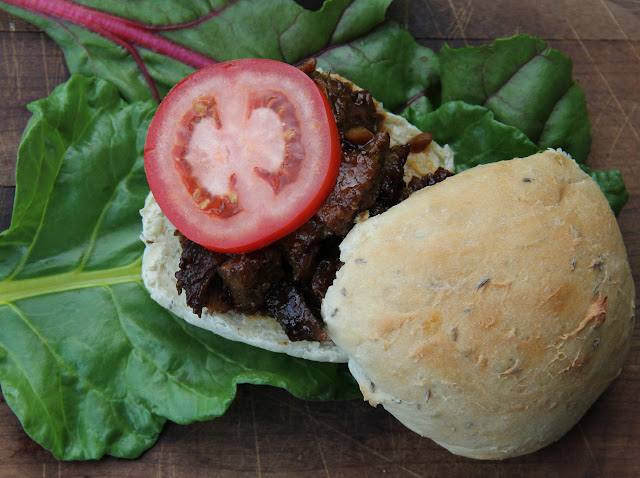
        I lead a pretty hectic life. Work takes up a considerable amount of time, so much time that I often can not schedule in special projects like smoking a brisket or pork shoulder, which happens to be an all-day affair. Luckily, a month ago I had the day off and somehow managed to divert all extraneous responsibilities so that I could give my pork shoulder the love it needed. If I commit to a whole day of fire, smoke, and meat then why would I settle for anything less than a great sandwich bun? A pulled pork sandwich does not need to be complicated, great meat, great sauce, and a great bun, enough said.

        But what actually makes a great bun recipe? First, it is important to understand what a bun is. Buns, like all bread are actually a solidified foam. The active yeast in these potato buns feed on sugar, and as a byproduct create alcohol and carbon dioxide. The carbon dioxide gas expands in the gluten networks of the sweet potato bun which raises the dough. This gives a distinctly light and fluffy texture. When the bread reaches an internal temperature of 140 F the starch from the flour, and in this case the additional sweet potato puree, begins to gelatinize(Gisslen) creating an even chewier soft bun than usual. After the gelatinzation process, the foam will remain stable until consumption or disposal(Fresh bread spoils at a much faster rate than commercial breads full of preservatives).

        Potato buns are not an uncommon baked good, they are actually found in various cuisines throughout the world. Some potato breads are denser and pancake-esque like the Potato Farls from Ireland(Dimbleby). The American version is fluffy and chewy, which makes a desirable white bread. I was texturally interested in the American version of potato bread, but I thought it would be fun to experiment to try and coax out a subtle sweet potato flavor.

        Chemically there are some variances between potatoes and sweet potatoes. Potatoes contain more potassium which makes yeast rise faster (Gordon) but sweet potatoes contain more sugar, which yeast consume as food. I did not find the chemical differences between the two tubers substantial. The result of this recipes was a successful potato bun, which was perfect for my smoked pork sandwich. I would also suggest trying these buns with either burgers or a marinated and grilled Portobello mushroom sandwich.

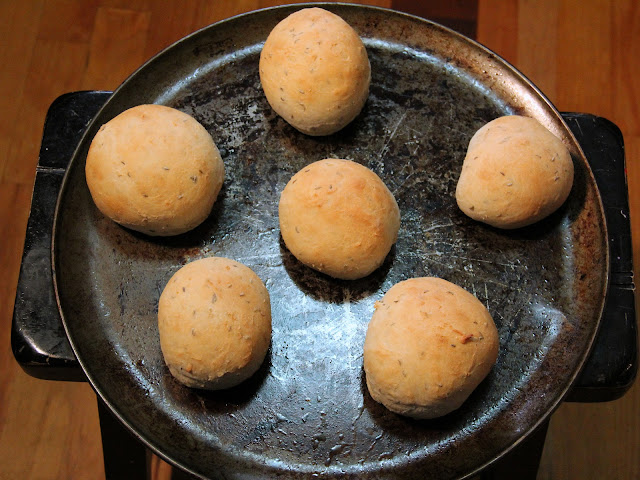
        Sweet Potato Bun


        Sweet Potato Bun


        Ingredients
        • 3 c All-purpose flour
        • 1/3 c Sweet potato puree
        • 1 t Kosher salt
        • 2 t Yeast
        • 1 c Water, lukewarm
        • 2 t Caraway seed
        Cooking Directions
        1. Set a pot of water to boil on high, afterwards peel sweet potato.
        2. Measure out 1 cup of lukewarm water and add the yeast. This process is called blooming.
        3. Cube and add to pot of water once boiling, cook until mash-able.
        4. Puree sweet potato.
        5. Add bloomed yeast water, 1/3 cup sweet potato puree, 3 cups of AP flour, sugar, caraway seed, and salt to a stand mixer or alternatively a stainless steel bowl and mix by hand.
        6. Once thoroughly integrated cover with a damp cloth or plastic and let proof for 1 hour.
        7. Separate into 6 individual buns and let proof for an additional 30 minutes.
        8. Add oil on top or an egg wash with a sprinkle of caraway seeds to top.
        9. Cook for roughly 20 minutes or until done at 350F
        Total Time: 2 hours

        Citations and Further Readings:
        • Dimbleby, Henery. " The easy way to make potato farls ." The Guardian. The Guardian, 14 Mar. 2014. Web.
        • Gisslen, Wayne. Professional baking. John Wiley & Sons, 2012.
        • Gordon, Megan. "Four Reasons Why Potato Buns Rule." The Kitchn. N.p., 19 July 2012. Web
        Asparagus Mousse Stuffed Morel

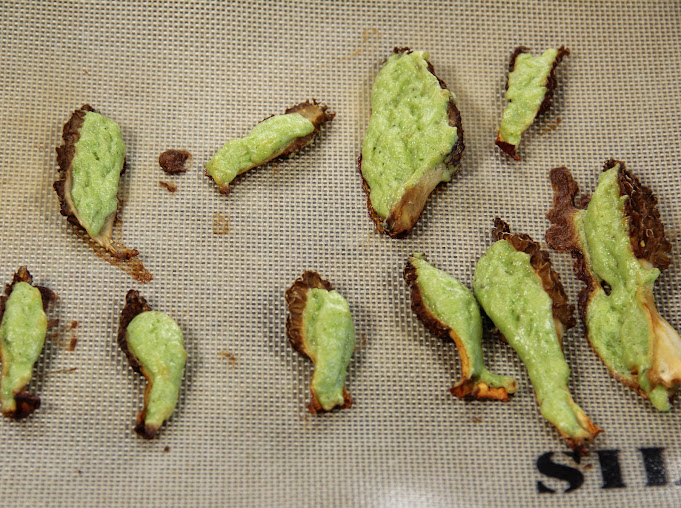
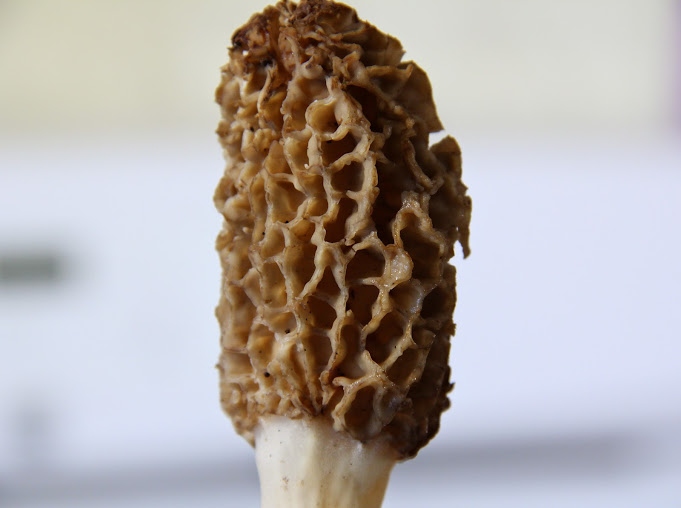
        Spring can be a very profitable time for the professional forager. Seasonal favorites like morel mushrooms fetch a high price, these professionals are lining their pockets with money and stomachs with the coveted mushrooms. But what about the rest of us? Sometimes amateurs such as myself only manage to get a handful of morels, why not turn the morels into single yet delicious bites like an amuse bouche and get more distance out of a limited amount of an ingredient? Taking inspiration from the asparagus shooting out of my garden bed, I wanted to create a bite size representation of the Spring, which I generally associate with savory, grassy, citrusy, and sweet flavors and luckily morels make interesting and delicious vehicle for the mousse.

        Granted amuse-bouche, which is simply a single bite hors d'oeuvre, is significantly more common in fine dining restaurants than the average home party, these stuffed mushrooms also work well as an appetizer if that is more stylistically appealing.

        The filling in this dish is a mousse, which is most commonly associated as a cold dessert, but can be either sweet or savory, cold or warm. The defining feature of a mousse is that it is a foam, which means by mechanical, chemical, or biological means gas is incorporated into the food, which ends up giving it a lighter texture. Yeast bread, whipped cream, or meringues are all foams.

        Today's article is formatted slightly differently than usual, the reason for this is that acquiring the morels is by far the most difficult part of this recipe, you might be able to buy morels at your farmers market or a whole food grocery store, but I wanted to provide a few resources to encourage getting out into the woods and looking yourself. The techniques involved in mushroom huntings cannot be given justice by a paragraph summary.

        Morel Hunting Information
        A Morel Sighting Map

        Mother Earth New's Morel Hunting Guide

        MO Department of Conservation False Morels

        Asparagus Mousse Stuffed Morel


        Baked Asparagus and Avocado Mousse Stuffed Morels


        Ingredients
        • 1/4 pound Asparagus
        • 1/2 Avocado
        • 10 Morels
        • 3/4 c Heavy cream
        • 1 Large egg
        • 1 Egg yolk
        • 1/2 Shallot
        • pinch of salt and pepper
        Cooking Directions
        1. In a pan with butter saute asparagus and shallot over medium heat.
        2. Add pan contents to a food processor and puree with avocado and cream.
        3. Add egg, egg yolk, and seasoning to the food processor,
        4. Cut morels in half and fill with mousse.
        5. Bake for 15 minutes at 375 F.
        Total Time: 30 min
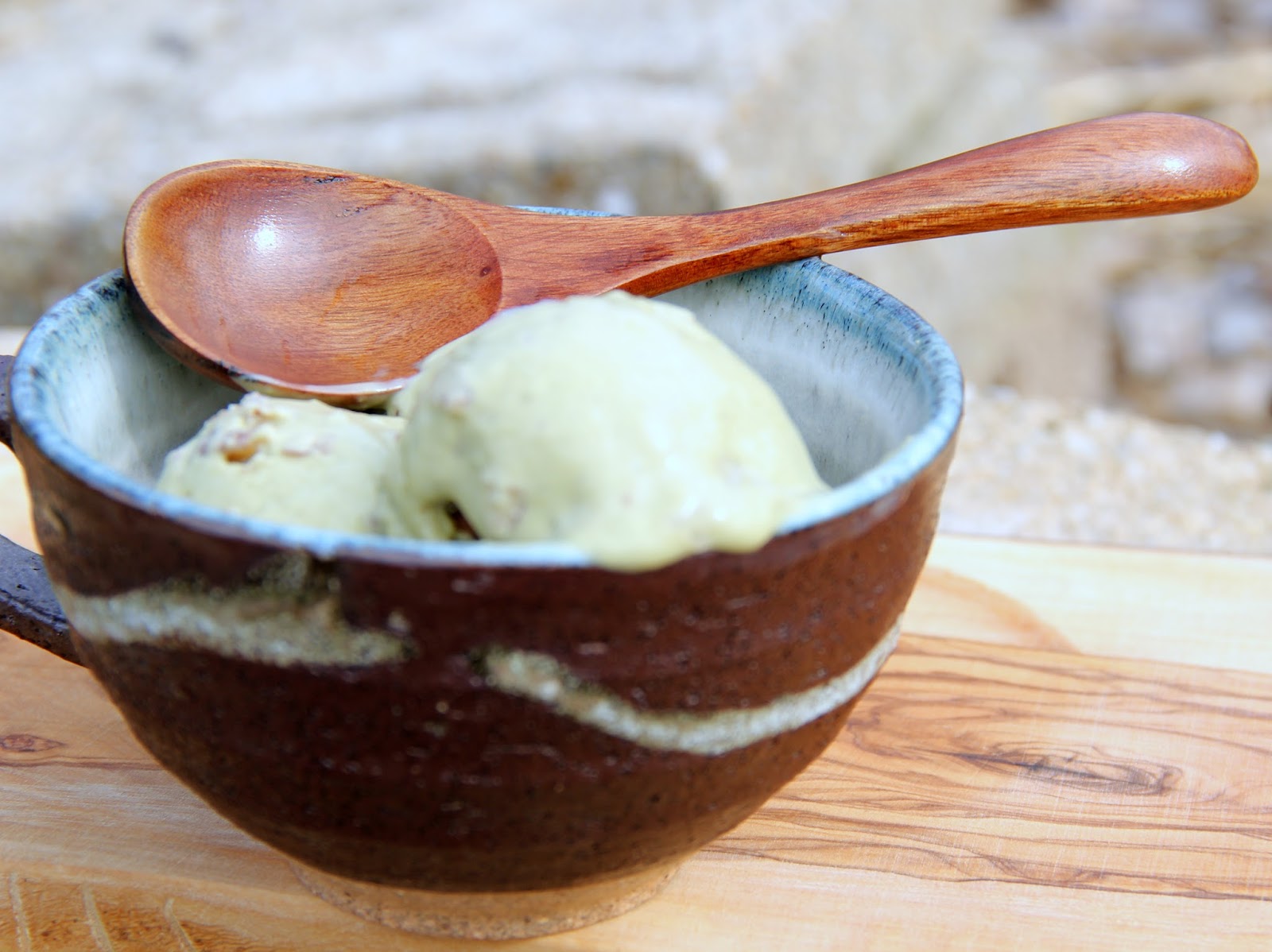
        Matcha Green Tea Ice Cream with PecansWhether spring, summer, or early autumn, the warmer seasons would not be as memorable if they did not include the occasional ice cream cone or sundae. While my lactose intolerant friends might strongly disagree, I believe that ice cream is a fundamental bonding tradition. By the way lactose intolerance does not exclude anyone from warm weather bonding over frozen treats, there is a world of beautiful dairy-free sorbets and other frozen treats such as My Award Winning Roasted Garlic Sorbet or a Faloodeh Cocktail.

        Our story today begins with me acquiring a used ice cream maker off of the local classifieds for a ridiculously good price. Sorbet, gelato, ice cream, and frozen yogurt all require an ice cream maker for a proper texture, so getting your hands on one is the first step to unlocking personal frozen dessert freedom. Investing in an ice cream maker may seem like a large obstacle at first, but once you start making ice cream at home, the quality of ice cream made surpasses almost anything you can buy in the supermarket and even most ice cream stands.

        While homemade ice cream may be a new concept, Ice cream and sorbets are hardly a new innovation. In the 13th century Arabs discovered that by adding salt to flavored waters and sugared creams and then freezing, slushes would be created instead of becoming frozen blocks of ice or cream. (McGee, 39). Even before the modern origins of ice cream, frozen desserts such as Faloodeh, iced vermicelli noodles flavored with rose water, honey, saffron, ect existed in the Persian empire dating back some 2,500 years(Marks).

        The ice cream in today's recipe is based on a custard due to the percentage of egg yolk and the fat content of the cream. Ice cream can be made with less egg yolk, or even by omitting the yolks all together, however I would not recommend omitting the yolks. The egg yolks provide stability, a longer shelf-life, smoother texture(Falkowitz), and a richer mouth feel, which are all qualities that I believe make a great ice cream.

        In addition to the egg yolks in this recipe the addition of honey serves a very interesting function. Honey is known as an invert sugar, this is a sugar composed of fructose and glucose with a viscous texture. Such invert sugars include honey, maple syrup, and corn syrup to name a few. Invert sugars have a lower freezing point and help with reducing ice crystals that may otherwise form in homemade ice cream. The result is a creamy smooth texture with a hint of honey, which of course is wonderful with green tea.

        The green tea used in this ice cream recipe is a very special powdered green tea known as matcha. Matcha is a pulverized green tea from Japan, highly regarded for its use in the Japanese tea ceremonies. (Tsuji, 334) Matcha's intense flavor and powdered texture also makes it ideal for cooking applications including ice cream bases. Matcha may be somewhat difficult to find at the average super market, but Japanese supermarkets, specialty tea stores, and of course the internet should provide reasonable options.

        Matcha Pecan

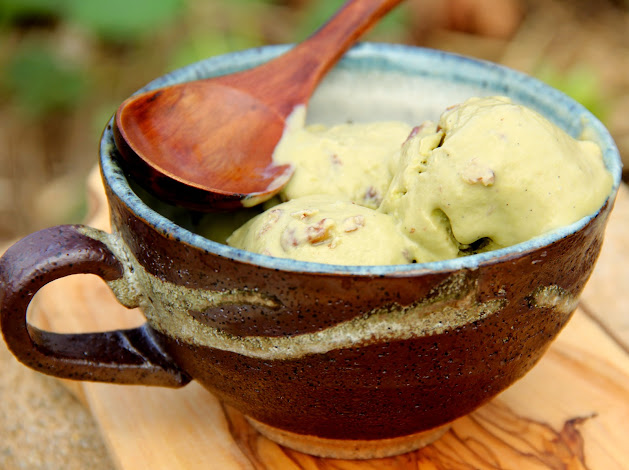
        Matcha Green Tea Pecan Ice Cream


        Ingredients
        • 2 c Heavy cream
        • 1 c Whole milk
        • 1/2 c Cultured buttermilk
        • 8 Egg yolks
        • 3/4 c Sugar
        • 1/4 c Honey
        • 2 T Matcha (powdered green tea, no substitutes will work)
        • 1/8 t Kosher salt
        • 1/2 c Crushed pecans
        • 1 Vanilla bean, scraped
        Cooking Directions
        1. Separate 8 egg yolks from egg whites. Reserve the egg whites for another use.
        2. Scrape all the innards of the vanilla bean and set aside.
        3. Add about 1/4 c of sugar to the egg yolks and whisk until combined.
        4. Combine cream, whole milk, buttermilk, the remaining 1/2 c of sugar, honey, matcha, vanilla bean scrapings, and salt into a sauce pan.
        5. Bring the liquid mixture up to a simmer and shut off the heat. Whisk thoroughly with a clean whisk while the liquid is heating up.
        6. Temper the egg yolks with the warm liquid. This technique is done by slowly introducing hot liquid to egg yolks and quickly whisking. If the egg yolk is introduced too quickly the egg yolks will solidify and not incorporate. For more information Watch this Tempering Video.
        7. Once tempered, add the egg mixture back to the remaining liquid and turn the heat on medium high. The goal is to thicken up the mixture so that it coats the back of a spoon, cook it to far and it will curdle.
        8. Quickly transfer to the ice bath you previously set up, stir to cool down if necessary.
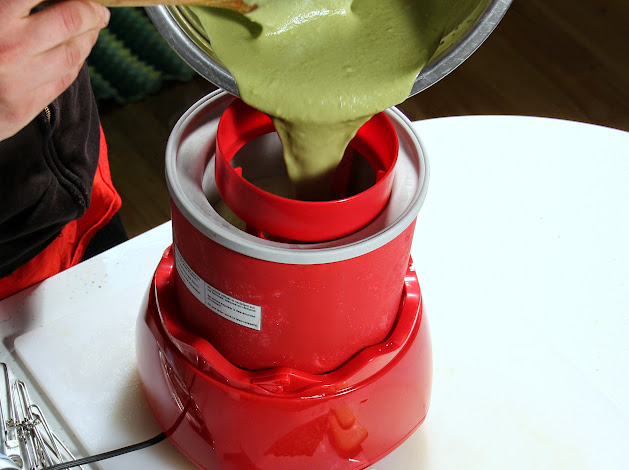
        9. Once completely cool add to your ice cream maker, follow the ice cream machines instructions.
        10. After pouring the liquid mixture add the pecans and let the ice cream maker work it's magic.
        11. Once solidified transfer to a container and store in the freezer over night, the next day this beautiful ice cream will be set and ready to enjoy.
        Total Time: 1 Hour + Rest overnight
        Citations and Further Readings:
        • Falkowitz, Max. "Do I Need to Use Eggs in Ice Cream (and How Many?)." Serious Eats. N.p., 2 Aug. 2013. Web. Path: http://sweets.seriouseats.com/2013/08/how-many-eggs-should-i-use-to-make-ice-cream.html.
        • Marks, Gil. Encyclopedia of Jewish food. Houghton Mifflin Harcourt, 2010.
        • McGee, Harold. On food and cooking: the science and lore of the kitchen. Simon and Schuster, 2007.
        • Tsuji, Shizuo. Japanese cooking: a simple art. Kodansha International, 2006.
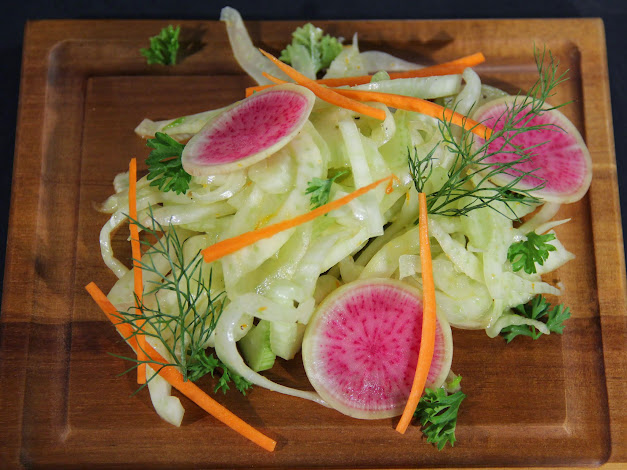
        Salad with Fennel, Radish, Carrots, Parsley, and Tangelo
        It is undeniably Spring, the sunshine is brighter, the birds are more cheerful, and plants are starting to blossom. This is a time of year to breathe a sigh of relief and let the natural beauty of our surroundings overtake our dreary winter minds. Spring is when the nature cycle focuses on birth and renewal, in terms of food sources this generally means plentiful young greens. These greens include popular salad greens such as arugula, lettuces, baby chard, and more exotic options like dandelion greens and ramps. Salad's are an excellent way to highlight the freshness of what is available in spring.

        Exploiting seasonal food sources is one thing, but capturing a season's flavor and its emotion is a whole other game. In my opinion a dish which tries to encapsulate Spring should reflect the internal feelings of warmth, brightness, freshness, and crispness. A diner should not feel weighed down after a meal, rather light and content. To try to achieve this I simply wished to compose a light salad of fennel, citrus, and radish to reinforce the crisp freshness of the fennel.

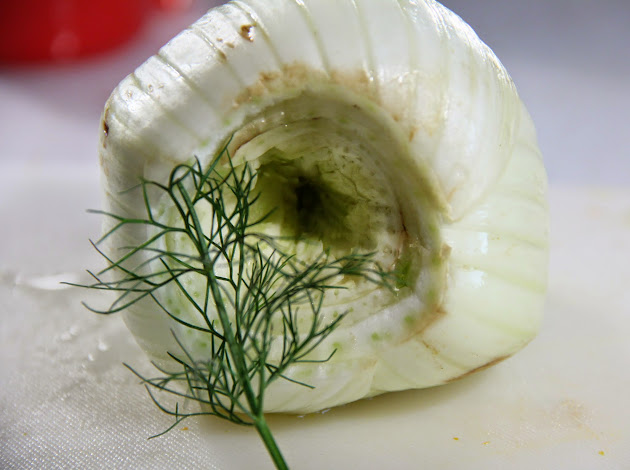
        Fennel is what I believe to be an under-appreciated produce item and garden vegetable in the United States. Fennel also known as anise, is a bulbed vegetable with a stalk and fronds. The stalk is fibrous like a celery stalk, and the fronds are similar to that of dill. Chemically, fennel bulbs contains two organic compounds which make them a perfect spring vegetable, if the goal is brightness and warmth. The first is anethole which is the anise flavor known in star anise, liquorish, ouzo, some varieties of basil. Fennel also contains the chemical compound limonene (Mcgee 316) which gives off the bright citrus aroma found in oranges, lemons, ect.

        Continuing to build on top of the base of the fennel, the humble radish adds a dash of crisp pepper to this salad. The crisp pungent flavor comes from sulfur and nitrogen compounds(McGee 321), that the radish and other members of the mustard family/cabbage family use as chemical defenses against predators. Common red radishes are the most widely used in North America, generally raw and in salads. Radishes are not only easy to plant home gardens, but they're also easy to seed save and plant throughout a considerably lengthy growing seasons, throughout Spring and Autumn.
         

        Finally, the brightness of the Tangelo dressing enhances both the fennel and radish by adding a bright acidity and a slight degree of sweetness. Tangelos are curious citrus fruits because they are a fairly modern hybrid, a mix of tangerines also called "Mandrin oranges" and Grapefruits. Because Tangelo's are so different they have their own class specification in the citrus family, known as Citrus X tangelo (Morton, J 158-160)

        This spring salad can be enjoyed alone or as a side dish. As with most Joy and Feast recipes the components are explained to better understand their individual purpose in the dish. Once an ingredient is understood they can easily be substituted, so if Tangelo or one of the other ingredients are not available, try a similar replacement and let me know how it turns out!

        Salad with Fennel, Radish, Carrots, Parsley, and Tangelo


        Spring Fennel Salad with Tangelo and Radish

        Ingredients
        • 1 Fennel bulb, shaved, fronds reserved
        • 2-4 Radish, thin sliced
        • 1 bunch Parsley, remove stems
        • 1 Carrot, peeled & julienned
        Cooking Directions
        1. Soak the radishes in ice water for one hour prior to serving, this will increase the crispness of the radish. Thin slice right before serving.
        2. Thin slice the fennel bulb on a mandolin or with a sharp knife. Cut the fronds and reserve for salad garnish.
        3. Toss the sliced fennel with the finish salad dressing.
        4. Either compose dressed fennel, fennel fronds, radish slices, parsley, and carrot or toss all ingredients together and serve

        Tangelo Dressing

        Ingredients
        • 1 Tangelo, 2 t zested, 4 T juiced and strained
        • 2 T Extra Virgin Olive Oil
        • 2 t Sugar
        • 1/2 t Kosher salt
        • 1/2 t Black pepper
        Cooking Directions
        1. Combine all ingredients in a small lidded container.
        2. Shake with the lid tightly secured, until dressing is formed.
        Total Time: 15 minutes
        Citations and Further Readings:
        • McGee, Harold. On food and cooking: the science and lore of the kitchen. Simon and Schuster, 2007.
        • Morton, Julia Frances. Fruits of warm climates. JF Morton, 1987.
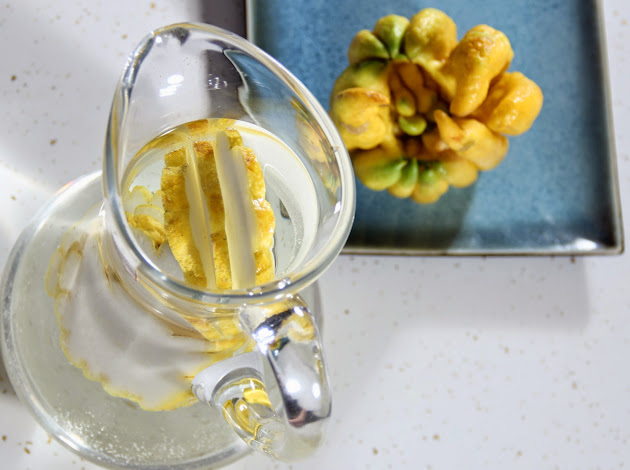
        Buddah's Hand Citron Infused Water

        I'll be the first to admit this "recipe" is not much of a recipe at all. Adding fruit to water is a pretty "been there, done that" recipe scenario, but flavoring water with Buddha's Hand citron really is muti-purposeful. This particular citrus is fairly uncommon and unbelievably fragrant, I'm talking stop you in your tracks wonderful, therefore I wanted to help encourage public awareness because they have recently started showing up in more super markets across the United States. The second purpose of using an infused water recipe is to encourage substituting more processed beverage options. I am a huge proponent of making refreshing beverages at home, which are always customizable unlike mass produced soft drinks, which are often much more harmful to the human body than homemade alternatives. Check out my recipe for Pecan Lemonade for more information on this.

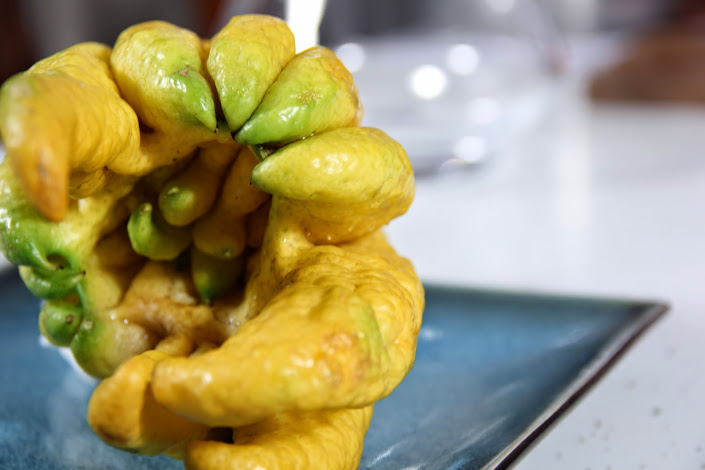
        Buddha's Hand citron is a an odd looking cultivated variety of the citron that appears to resemble a hand. The fruit was cultivated in the Yangzte valley in China, and modern day Chinese farmers grow up to 6 different varieties of the Buddha's Hand citron. (Smith) The fruit is popular in both China and Japan, and given as gifts around new year to bring good fortune upon a home. (Karp)

        Citrons of various varieties have long been valued throughout the Mediterranean, Middle East, and East Asia for both traditional and culinary purposes. The citron came to the Middle East from the Himalayan foot hills around 700 BCE and the Mediterranean around 300 BCE, The peels of citrons have long been candied, pickled, and used to perfume rooms in Asian and Jewish religious ceremonies (McGee, 373).

        I would highly suggest picking up one of these citrons if you happen to see them in your super market, the seasons in which they may appear are late autumn to early spring. If you don't wish to use this citron for a culinary purpose, just cut it open, and leave it to fill the room with its essence, it is one of those simple pleasures everyone should experience.

        Buddah's Hand Citron Infused Water


        Buddha's Hand Citron Infused Water


        Ingredients
        • 1 Buddha's Hand citron
        • 1 Pitcher of filtered water
        Cooking Directions
        1. Slice the citron into 1/4" circles, place in the pitcher of water, and place the pitcher of water in the refrigerator overnight.
        Total Time: 12 hours

        Citations and Further Readings:
        •  Karp, David. "Buddha's Hand Citron." Flavor & Fortune 1998: 5-6. Print.
        • McGee, Harold. On food and cooking: the science and lore of the kitchen. Simon and Schuster, 2007.
        • Smith, K. A. "What the Heck Do I Do With a Buddha's Hand? Read more: http://www.smithsonianmag.com/arts-culture/what-heck-do-i-do-buddhas-hand-citron-180949871/#GOYYMtt6RUop4cU6.99 Give the gift of Smithsonian ma." Smithsonian.com. Smithsonian, 24 Feb. 2014. Web. 1 Mar. 2015. <http://www.smithsonianmag.com/arts-culture/what-heck-do-i-do-buddhas-hand-citron-180949871/?no-ist>.
        Romanesco Fractal Salad
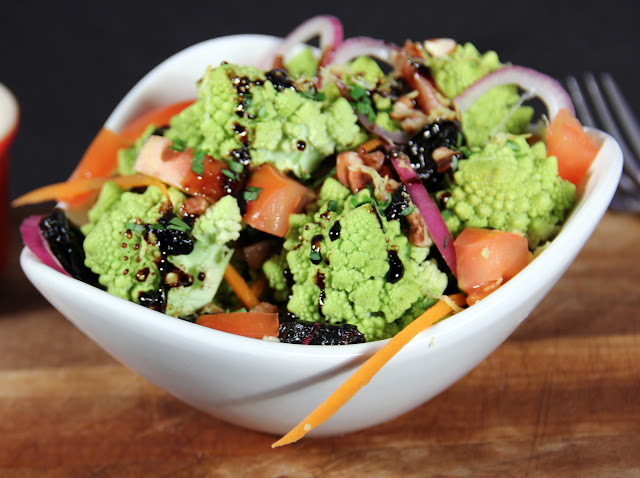
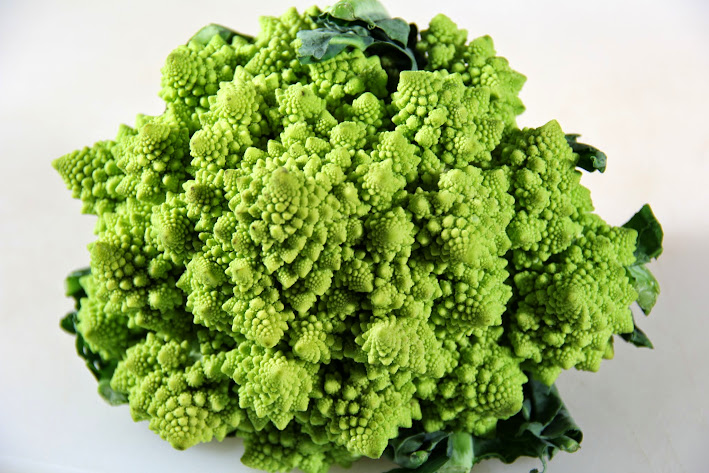
        I am a firm believer that occasionally people should push themselves, jump off the high dive, try something new. Picking up a strange new ingredient at the supermarket may not be as drastic as starting a new career, none the less it expands ones universe. In the past year I have been noticing a gorgeous item in the produce section at my local grocery stores, this item which is beautiful in design is the Romanesco or Romanesque cauliflower. A plant which is closely related to both cauliflower and broccoli, Romanesco is strikingly unique in its almost fractal-like appearance.

        A fractal is a geometric design which is is rooted in the principle of self-symmetry, or in other words a shape is made of smaller versions of itself (Frame), The Sierpinski Triangle is a great example of a fractal if the concept is still a little fuzzy. While Romanesco is fractal-like to the naked eye, it is not considered an actual fractal, once examined under a microscope its unique geometric similarity dissipates.

        At this point you may be saying to yourself, "well it looks cool, but why should I eat it?" Romanesco is both a delicious alternative to veggies in the brassica family (Mustard, Cabbage, Broccoli, ect) and a food relic of the old Roman marketplaces, dating back to the days of Julius Ceaser (DePalama). Besides holding the admiration of the Italian people for thousands of years, it's really quite tasty. Romanesco has a more mild taste than common broccoli, and I find that it's delicious in both cooked and raw forms.

        Other cherished elements of Italian culinary traditions, balsamic vinegar and red wine are the majority components of this salad's sweet and tart salad dressing. Because I used conventional and there for much affordable balsamic vinegar, I used a technique called reduction in order to achieve a denser consistency. Reduction is simply when a liquid with a high sugar content is boiled until enough water evaporates leaving the rest of the liquid as a syrup. Conventional balsamic vinegar is now common in all supermarkets, which is excellent for a variety of purposes. However, if you are unfamiliar with real balsamic vinegar, this excerpt from Versitile Vinegar does an excellent job explaining what actually makes a balsamic vinegar.

        Traditional Balsamic Vinegar of Modena must be produced within the town of Modena in Italy. It was granted a protected designation of origin (PDO) by the European Union in 2000 (Council Regulation (EC) No 813/2000, April 17, 2000).

        “Aceto Balsamico Tradizionale di Modena” is made from white and sugary Trebbiano grapes grown on the hills around Modena. Custom demands that the grapes are harvested as late as possible to take advantage of the warmth that nature provides there. This traditional vinegar is made from the cooked grape "must" and is aged for a minimum of 12 years or 25 years (denoted by the label claim “extra aged”). The aging process occurs inside barrels of successively smaller size of different kinds of wood, such as juniper, chesnut, mulberry and oak.
        All of the product that is bottled must pass a sensory examination run by a panel of five tasting judges. The Italian Ministry of Agriculture in 2009 designated Consorzio Tutela ABTM (Consortium for Protection of Traditional Balsamic Vinegar of Modena) to run controls and to supervise manufacturing, as well as to promote the product at the institutional level. The Consortium has over 300 members.

        Traditional Balsamic Vinegar of Modena is only bottled in the distinct bulb-shaped glass bottle of 100 ml (3.4 ounces). Traditional Balsamic Vinegar of Modena is dark brown, but full of warm light. It is exceptionally sweet and thick, with a rich, complex aroma with light acidity. It is generally found in specialty stores.

        *This salad is meant to be vibrant and fresh. In order to maintain the vibrancy of the salad it is paramount to use the freshest produce you can acquire. Feel free to substitute any of the ingredients for another which you know are fresher and look beautiful.
        Romanesco


        Fractal Salad

        Ingredients
        • 1 Head of romanesco
        • 1 Red onion
        • 1 Ripe tomato
        • 1 Large carrot
        • 1/4 c walnuts, toasted
        • 1/2 c Dried cherries (raisins are an acceptable substitution)
        • Lemon zest
        • Parsley, picked
        Cooking Directions
        1. Construct a salad with all these components, play around with shapes, colors, and layering.

        Red Wine Balsamic Reduction

        Ingredients
        • 1/2 c Dry red wine
        • 1/2 c Balsamic vinegar
        • 2 t Sugar
        • 1 t Ginger, grated
        Cooking Directions
        1. Add all ingredients to a small pot and put heat on medium high
        2. Reduce until reduction can coat the back of a spoon and stick. Refrigerate and serve ontop of salad once cool.
        Total Time: 30 minutes

        Citations and Further Readings:
        • Frame, Michael, Benoit Mandelbrot, and Nial Neger. "Fractal Geometry." Yale, n.d. Web. 23 Feb. 2015. <http://classes.yale.edu/fractals/>.
        • DePalma, Gina. "Seriously Italian: Broccoli Romanesco." Serious Eats. N.p., n.d. Web. 23 Feb. 2015. <http://www.seriouseats.com/recipes/2009/10/seriously-italian-broccoli-romanesco-recipes.html>. 
        • "Today's Vinegar." versitilevinegar. The Vinegar Institute, n.d. Web. 23 Feb. 2015. <http://www.versatilevinegar.org/todaysvinegar.html>.
        Middle East Egg and Eggplant Skillet To the average American citizen few regions of the world are more veiled in myth and misconception than the Middle East. This region is conceptually a fairly modern and Euro-centric area which spans a vast territory from Northern Africa all the way to Eastern Iran. The concept of what is now considered the Middle East may be traced back to the area that Arabian Muslims invaded after the Prophet Muhammad's death in 632 A.C.E (Husain).

        Despite a heavy association with Islam the region known as the Middle East has diverse array of culture heritage and diversity that spans outside of Islam, which has helped define the region. The diversity and history of each unique region in the Middle east are reflected in their cuisine. For instance, breads in Egypt are extremely important, the importance of leavened bread is even directly referenced in the Old Testament. Across the Red Sea the diet of Saudi Arabia relies heavily on rice instead of bread, as well as the heavy use of chicken and lamb. The food ways of these areas may share some overlapping dishes, but they also intertwine with each geographical areas history.

        Mesopotamia, the cradle of civilization, was found in between the Tigris and Euphrates river in modern-day Iraq. This is where scholars have been able to trace back the earliest signs of civilization in the Western world. The growth of civilization in Mesopotamia was due to the the fertile land and adoption of agriculture. Agriculture allowed for a larger production of food, which could support a larger population than the simple hunter and gatherers of their ancestors, who were more focused on finding their next meal than building upon a lexicon of unique culinary traditions.

        This region also has an expansive history of cuisine influence through trade. The silk road ran directly through the Middle East. Foreigners were constantly traveling through the region, bringing along their own cultural traditions as well as spices and produce from other regions. For example, the Chinese tradition of pasta making was described in a Middle Eastern text centuries before it was known to come to Europe, "a 9th century Syrian text gives the Arabic name Itriya to a preparation of semolina dough shaped into strings and dried." (McGee, 572)

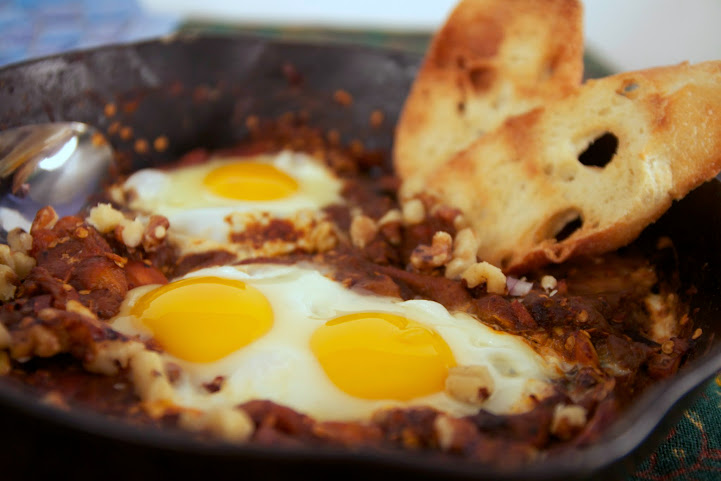
        Because of this diversity of culture, spices, and produce all found the Middle East, unique areas all throughout the region developed some incredible culinary traditions, which I hoped to honor in this dish, a humble yet delicious fusion. I wanted to fuse a North Iranian breakfast dish known as Mirza Ghaseni, which is an egg and eggplant mixture with Shakshuka, a North African (Clark) egg and tomato sauce stew. This skillet can either be served as an appetizer or an entree, and the exclusion of the eggs makes the meal completely vegan, if dietary restrictions demand.

        Middle East Egg and Eggplant Skillet


        Middle East Egg and Eggplant Skillet


        Ingredients
        • 1 Large eggplant
        • 2-3 Eggs
        • 4 Garlic cloves, minced
        • 2 Large tomatoes, medium dice
        • 1 T Tomato paste
        • 1/2 t Turmeric
        • 1/2 t Smoked paprika
        • Walnuts, crushed as a garnish
        • salt to taste
        Cooking Directions
        1. Preheat oven to 400F
        2. Slice eggplant in half length-wise, and lightly coat the exposed flesh in oil.
        3. Place the eggplant on a sheet pan skin-side up. with a sharp knife poke several holes in the skin of the eggplant. Roast for 40 minutes.
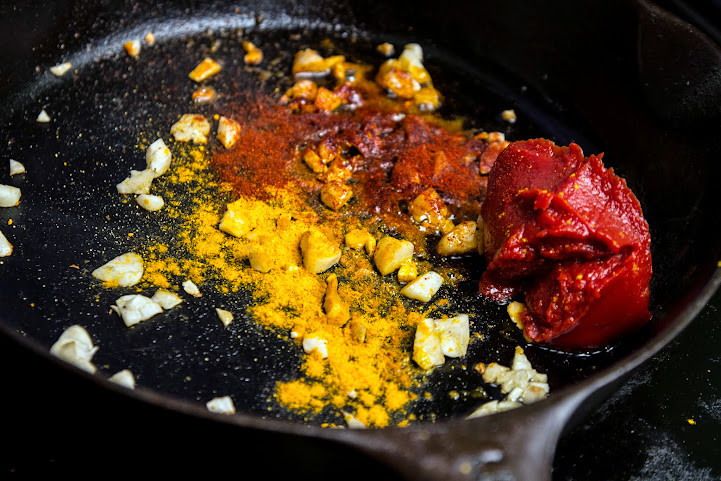
        4. While eggplant is roasted cook minced garlic in a skillet for 2 minutes on medium heat, add tomato paste, tumeric, and smoked paprika and cook for another 2 minutes. Add freshly diced tomatoes to the skillet and cook for another 10-15 minutes.
        5. When eggplant is done cook scrape the flesh from the skin and add to the skillet mixture. Salt skillet mixture to taste.
        6. Turn the heat to medium low and make several holes in the skillet mixture so that the skillet surface shows. Crack several eggs into the holes made, so they come in direct contact with the metal surface.
        7. Cook the whites of the eggs through, then garnish with crushed walnuts.
        Total Time: 1 hour

        Citations and Further Readings:
        • Clark, Melissa. " Shakshuka With Feta ." Cooking. New York Times, n.d. Web. 15 Feb. 2015. <http://cooking.nytimes.com/recipes/1014721-shakshuka-with-feta>.
        • Husain, Salma. Islamic Food: with Healing Toucch. New Dehli: Roli Books, 2011. Print.
        • McGee, Harold. On food and cooking: the science and lore of the kitchen. Simon and Schuster, 2007.
        Photo's by Jordan Henline
        Beer Battered Delicata Squash Fries

        Who doesn't love french fries? People love french fries all over the world. In fact, frozen french fries top the list of exported U.S. potato products, they account for more than half of the total potato export volume. In 2009 the United States exported 3 billion pounds of frozen french fries (USDA). French fries have a special place in our collective hearts and arteries, whether it's a burger with fries or fish and chips, fried potatoes are not going anywhere.

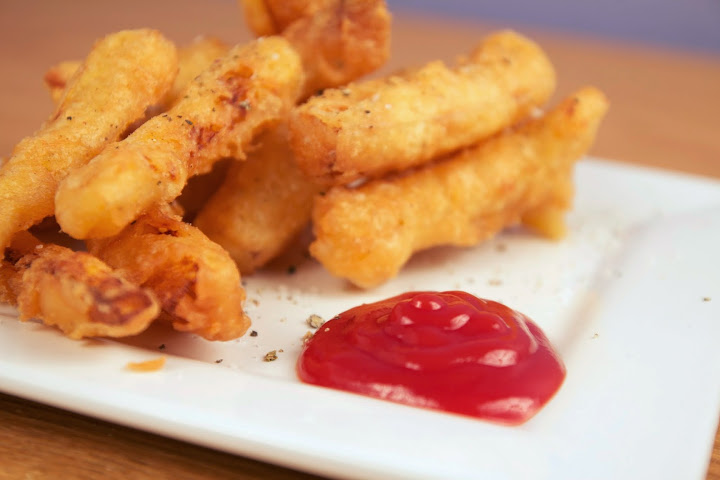
        With all due respect to the fried potato, it's not a completely seasonal vegetable, despite the ability to purchase in supermarkets year-round, potatoes are generally considered an autumn crop in most regions of the United States. Using seasonal ingredients and engaging cherished food traditions can go hand in hand with a little bit of creativity, and by following my theory of frying starchy vegetables you may adapt or expound upon the recipe in this article. This simple theory is starchy vegetable + beer batter + deep frier = good stuff. Nature loves variation and so do I, so changing the vegetable and therefore recipe for fries depending on season only makes sense.

        The current season is winter, and hearty winter squash are wonderful for sustenance throughout the winter. This is partially because winter squash can be kept inside the home at room temperature for months if properly hardened during harvest. I personally believe winter squash, which includes the popular pumpkin, butternut squash, and of course delicata should be kept in everyone's home during this season of scarcity.

        To better explain how winter squash last so long I will chemically compare them with their close cousins, summer squash which include zucchini and pan squash. 90% of winter squash's calories come from carbohydrates and 50% of those carbohydrates are starch(TWHF), this starch sustains the winter squash for a duration of months due to the slow conversion of starch to sugar over time. Summer squashes do not have the same lifespan as winter squash because their energy source is largely composed of the carbohydrate glucose, this is also known as the sugar in ones blood sugar. Vegetables which keep stores of energy for long periods of time like winter squash or tubers such as potatoes slow release energy due to their starchy composition and low water composition are the ideal candidates for seasonal frying.

        Besides being a good source of starchy energy, winter squash are full of vitamin A, and a good source of vitamin C and fiber (TWHF). In fact using Nutritiondata.self.com to compare overall nutrition with potatoes, winter squash are both more filling and more nutritious.

        Delicata squash have a delicious and semi-sweet squash taste. When covered in the beer batter and fried, the squash melts in your mouth. It's not a potato, and I promise you that is a good thing. Feel free to try with different winter squash varieties such as pumpkin or kabocha for slight variants on taste. 

        Battered Frying

        Beer Battered Delicata Squash Fries


        Ingredients
        • 1 Delicata squash
        • 1 c All-purpose flour, & enough to coat
        • 1 Large egg, beaten
        • 2 t Old Bay seasoning
        • 1 bottle of wheat ale
        • Enough High heat oil to fill a pot 3-5 inches
        Cooking Directions
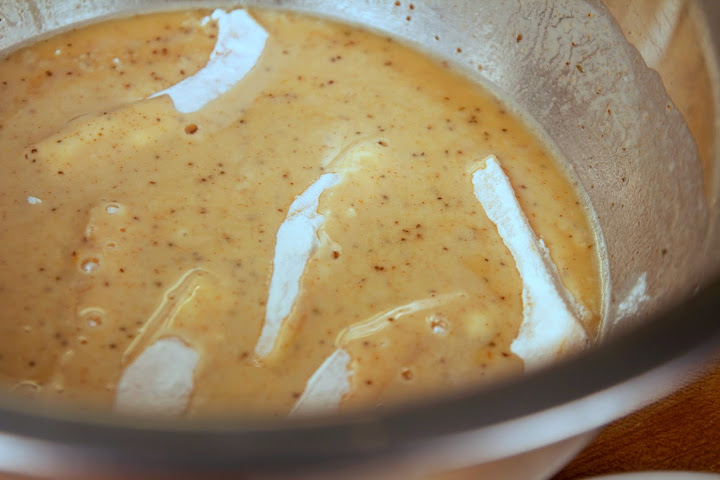
        1. Combine 1 cup of flour, egg, old bay spice, and bottle of beer and whisk until combined.
        2. Slice off the skin of the squash.
        3. Scrape out the interior of the seeds, reserve for other use.
        4. Slice the squash into a thick julienne, I prefer them larger.
        5. Dredge the squash slices in enough all purpose flour to coat.
        6. Drop the dredged slices into the prepared beer batter.
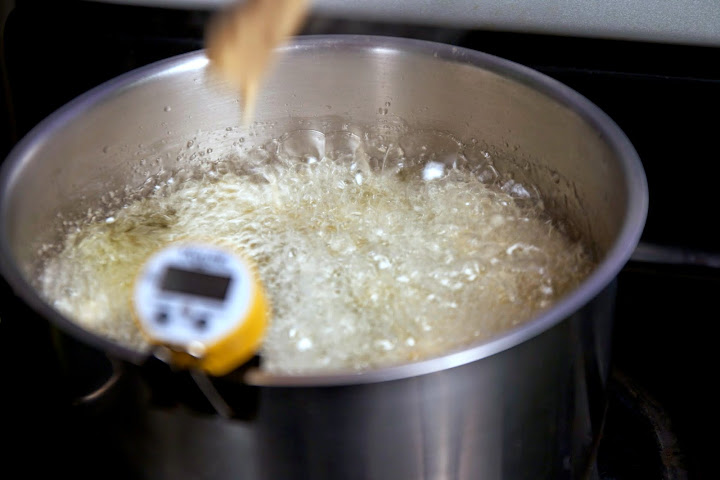
        7. Carefully drop the battered fries into a pot of oil at 375 F until they float to the top. Roughly 3-5 minutes.
        8. Remove from oil and quickly absorb excess oil with a paper towel.
        9. Season with salt and pepper.
        Total Time: 15 min
        Citations and Further Readings:

        • Bond, Jennifer K. "Potatoes." United States Department of Agriculture Agricultural Research Service. USDA, 7 Oct. 2014. Web. 3 Feb. 2015. <http://www.ers.usda.gov/topics/crops/vegetables-pulses/potatoes.aspx#trade>. 
        • Carrera, Amy L. "Carbohydrates in Zucchini." Livestrong.com. N.p., 28 Jan. 2015. Web. 3 Feb. 2015. <http://www.livestrong.com/article/459868-carbohydrates-in-zucchini/ >. 
        • "Squash, Winter." The Word's Heathiest Food. The George Mateljan Foundation, n.d. Web. 3 Feb. 2015. <http://www.whfoods.com/genpage.php?tname=foodspice&dbid=63 >.
        Photos by Jordan Henline
        Bourbon Whiskey Pickled Quail Eggs

        Dinner parties are a fairly common occasion at my house, in fact we generally entertain guests once or twice a month. A three to five course meal is not uncommon. This amount of work, generally needs a certain amount of harmony when preparing, a low commitment first plate like cheese and charcuterie (the french word generally used for dried/cured/preserved meat) are a favorite first course of mine. Charcuterie can be made well ahead of time, and cheese generally keeps well in the refrigerator, so it's not difficult or time consuming to put a plate together. I always include pickles on my cheese and charcuterie plates because of the acidity of pickles, they create a wonderful contrast between the savoriness of meat and cheese. Due to this I constantly have a pickle of some sort sitting in the back of my fridge or fermenting on the counter.

        Pickles in the modern western world are commonly associated with cucumbers. Pickling has a much more significant historical and culturally relevant role than the humble kosher dill tucked in between a pastrami sandwich. Japanese tsukemono, European sauerkraut, and Korean kimchi are all pickles with distinct traditions and important histories. In fact, kimchi was recently added to the UNESCO Intangible Cultural Heritage of Humanity List(Mayring)!

        Even though modern pickles are primarily considered as condiments, many cultures have been reliant on pickles as a means of survival. Pickling gave many civilizations a way to make the summer and fall's produce last throughout the winter especially in temperate climates (97, Katz). Pickles have been a means of food preservation or thousands of years, the exact origin of the pickle is uncertain, but evidence of the Mesopotamians pickling cucumber can be traced back to between 2400-2030 B.C.E (Avey).

        Pickling is the technique of submerging foodstuff in an acidic environment where harmful bacteria can not survive. Acid occurs in nature, both in flora and fauna, but the most common means of producing a pickle solution was fermentation. Fermentation in the case of pickles is the process of allowing beneficial lactic acid creating bacteria thrive on food which is submerged in a brine. Early civilizations relied on the growth of these helpful bacteria which produce lactic acid as a byproduct of living and multiplying, the growth of lactic acid bacteria made contained environments such as a crock or jar an acidic enough environment which harmful bacteria could not grow. The use of modern day commercial vinegars, which are already fermented, make pickling faster and more convenient than more traditional forms (lacto-bacteria) of pickling.

        Pickled eggs may bring up images of a biker dive bar, but I think that they are really fun. I specifically wanted to use quail eggs in this recipe, where in many parts of the world they are considered a delicacy. Truthfully, I used them in this recipe due to their size, they are bite sized, so whether used as a Hors d'oeuvre, Amuse-bouche, or placed on a charcuterie plate, the quail egg gives this pickle a certain degree of sophistication.

        There are many different flavoring and preservation ingredients which may enhance a pickle, overtime flavors meld and become an extraordinary experience. I wanted to use Bourbon primarily as a flavoring agent in the solution because it is sweet and savory. Bourbon is my spirit of choice, and is also uniquely designated near the region of the United States where I live. Bourbon is a whiskey made from 70-80% maize, 10-15% malted barley, and either rye or wheat in the remainder of the mash. Bourbon's sweet vanilla notes come from aging in charred oak barrels. This is a particularly impactful process on bourbon's flavor profile because no artificial colors, sweeteners, or flavors may be added to Bourbon, the only additive allowed is water (McGee 768).

        In addition to serving this as an element on a meat and cheese plate, I also deviled the eggs and composed a simple salad of dried figs and fresh mozzerella. I wanted to demonstrate the versatility of pickling quail eggs, and hopefully encourage you to add a package of quail eggs on your next grocery list. These delicate and savory eggs are certain to impress at the next potluck or dinner party.

        Storage note: These eggs are best eaten within about 2 weeks, and always keep them stored in the refrigerator.
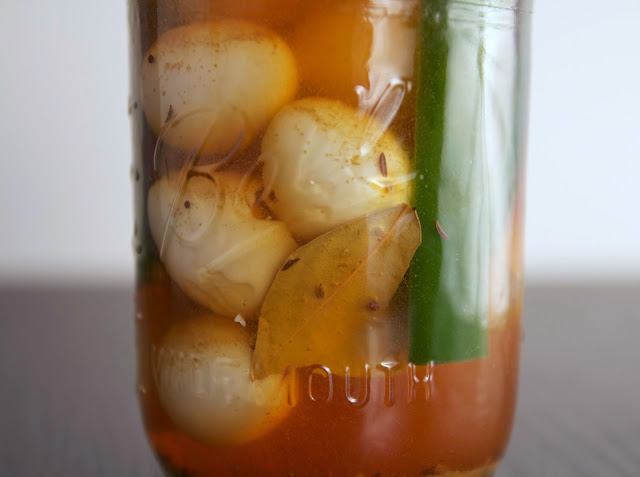
        Bourbon Whiskey Pickled Quail Eggss Bourbon Whiskey Pickled Quail Eggs


        Bourbon Pickled Quail Eggs


        Ingredients
        • 12-18 Quail eggs
        • 1 & 1/4 c Distilled white vinegar
        • 1/2 c Bourbon
        • 1/4 c Maple Syrup
        • 1/4 c Water
        • 1 t Kosher salt
        • 2 Dry bay leaves
        • 1 t Mustard seed
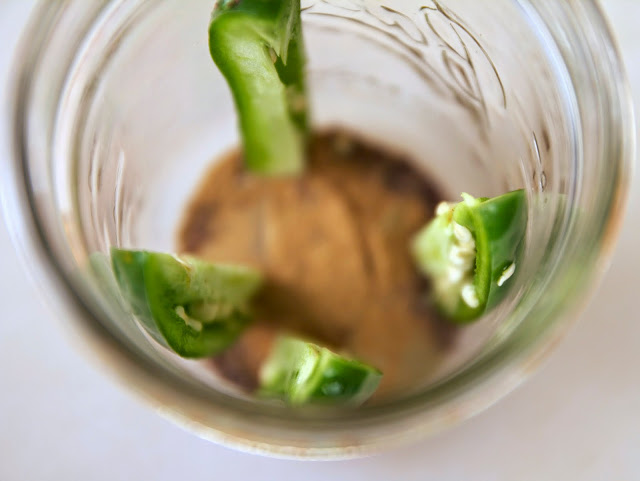
        • 1 Jalapeno, quartered
        • 1 t Coriander seed
        • 1/4 t Caraway seed
        Cooking Directions
        1. Combine the white vinegar, Bourbon, maple syrup, water, and salt in a small pot. Bring to a boil then turn off the heat.
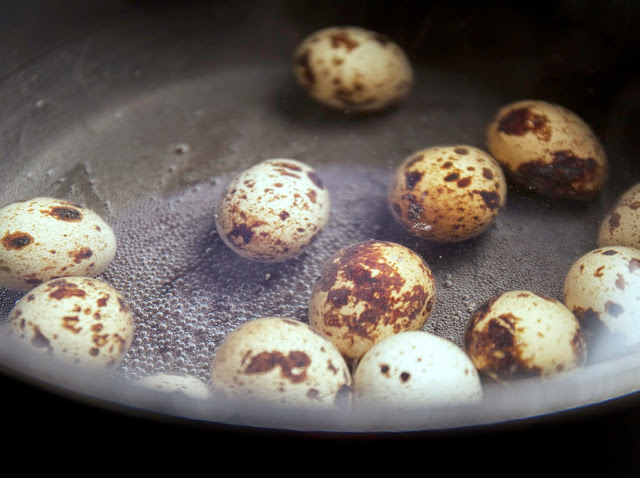
        2. In a separate pot boil all quail eggs for 3 minutes then immediate transfer to an ice bath, let it sit for 15 minutes.
        3. Peel the shells under warm running tap water.
        4. Add the eggs and all the spices into a mason jar, then pour in the liquid pickling brine.
        5. Let the jar come to room temperature, then cap and store in the fridge. Wait three days until serving.
        Total Time: 30 min

        Citations and Further Readings:
        • Avey, Tori. "History in a Jar: The Story of Pickles." The History Kitchen. PBS, 3 Sept. 2014. Web. 1 Feb. 2015. <http://www.pbs.org/food/the-history-kitchen/history-pickles/>. 
        • Katz, Sandor E. The Art of Fermentation. White River Junciton: Chelsea Green Publishing, 2012. 97. Print. 
        • Mayring, Skye. " Kimchi Tradition Gets UNESCO Designation" January 05, 2014 Travel Age West. N.p., 5 Jan. 2014. Web. 1 Feb. 2015. <http://www.travelagewest.com/News/Kimchi-Tradition-Gets-UNESCO-Designation/#.VM5nLsbZmq4>. 
        • McGee, Harold. On Food and Cooking. New York: Scribner, 1984. 768. Print. 
        Photo's by Jordan Henline